Model the electrical pathway
Projects begin with site load, PV layout, MPPT limits, battery reserve expectations, and EV charging behavior rather than a disconnected equipment shortlist.
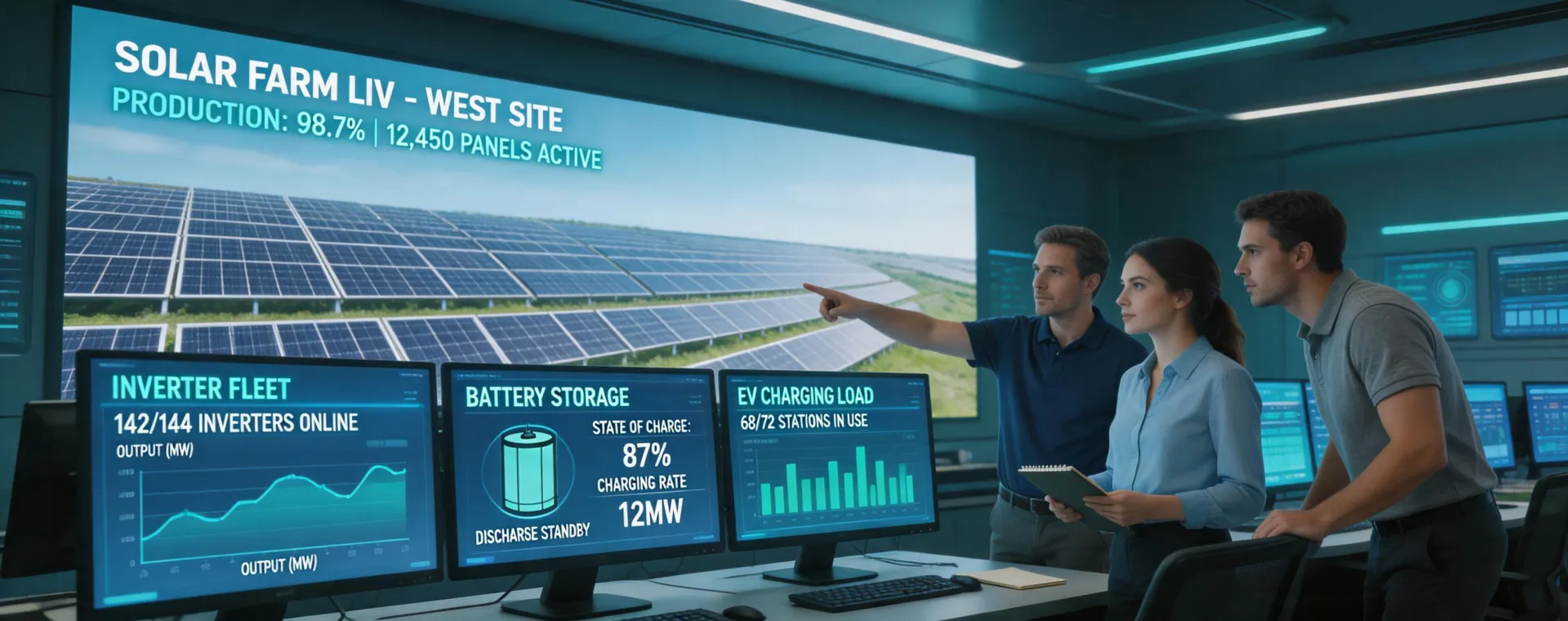
Solaredge represents a forward-looking approach to solar inverters, batteries, EV charging, and monitoring: connected equipment choices, disciplined documentation, and operational visibility that remains useful after commissioning.
Projects begin with site load, PV layout, MPPT limits, battery reserve expectations, and EV charging behavior rather than a disconnected equipment shortlist.
Gateways, meters, installers, and owner permissions are treated as core infrastructure because fleet intelligence depends on clean commissioning data.
Production curves, SOC patterns, alarm status, firmware workflow, and service notes help owners compare expected yield with actual behavior.
As solar, storage, and EV load converge, portfolios need documented control logic and data exports that can support future grid-interactive programs.
The brand story is not only about hardware. It is about moving from standalone conversion equipment toward an integrated operating model where installers, homeowners, facility teams, and asset managers see the same energy picture.
Inverter and optimizer planning made module-level behavior more transparent.
Battery planning added reserve logic, usable kWh, and backup-circuit questions.
Charging equipment made load management and solar-aware scheduling more important.
Dashboards, alerts, API access, and firmware workflows help portfolios stay serviceable.
Renewable energy work moves through developers, EPCs, installers, electricians, utility reviewers, inspectors, homeowners, facility managers, and service desks. Solaredge content is organized so each group can find the decision points that matter to them without losing the larger system context.
Tell us which product categories and sites matter most. We will help frame a clear planning conversation for solar inverters, batteries, EV charging, and monitoring.