Renewable energy sites
Applications

Renewable energy applications where inverter intelligence changes the operating model

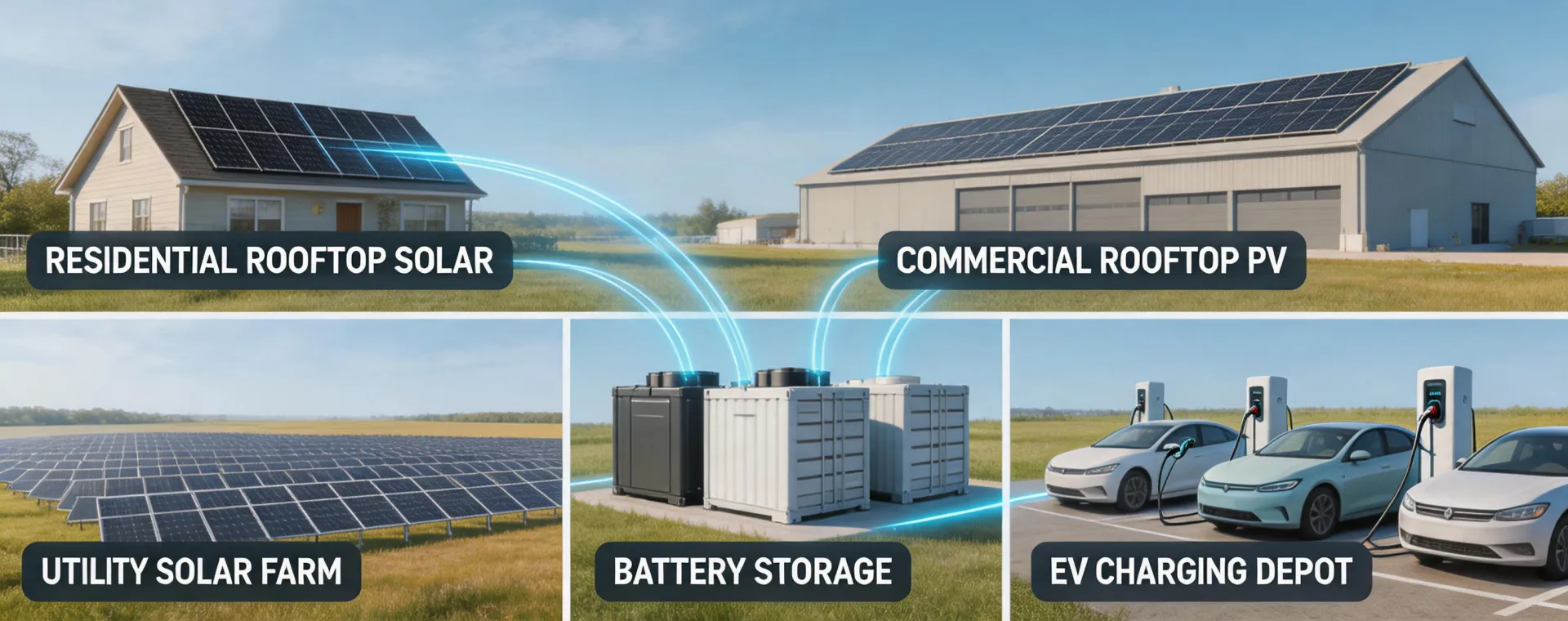
Solaredge supports sites where generation, storage, charging, and monitoring decisions must be understood together. The application context determines voltage window, communication needs, warranty planning, and the way service teams respond after go-live.

Residential rooftop solar

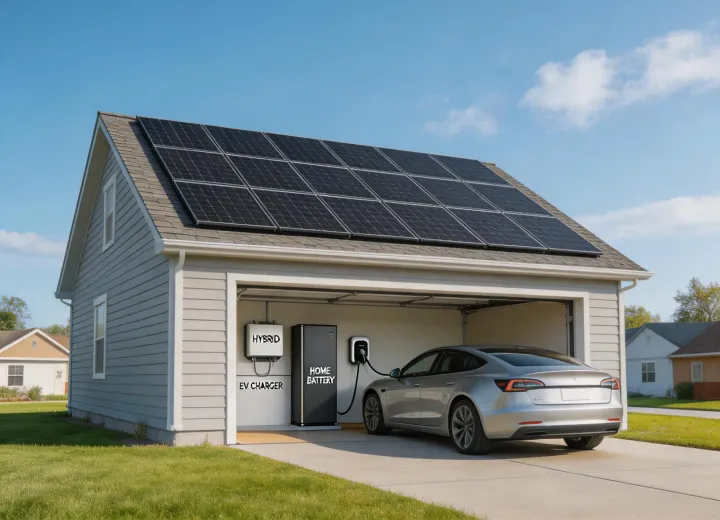
Residential energy systems

Homeowners need a clear story about backup circuits, app visibility, utility tariffs, roof shade, and battery reserve settings. Installers need the same information in a form that supports permitting, commissioning, and service.
Commercial solar rooftop

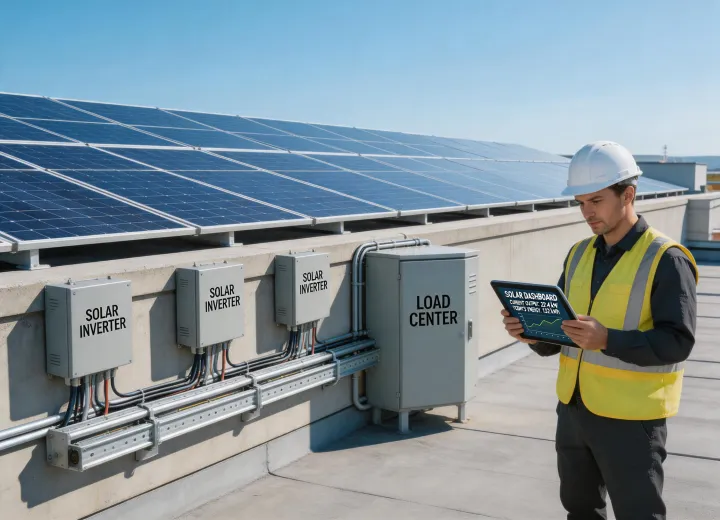
Commercial and industrial facilities

Facilities evaluate demand charges, operations schedules, roof access, interconnection limits, and the value of monitoring. Solaredge helps translate these constraints into inverter, storage, and data decisions.

Utility solar farm

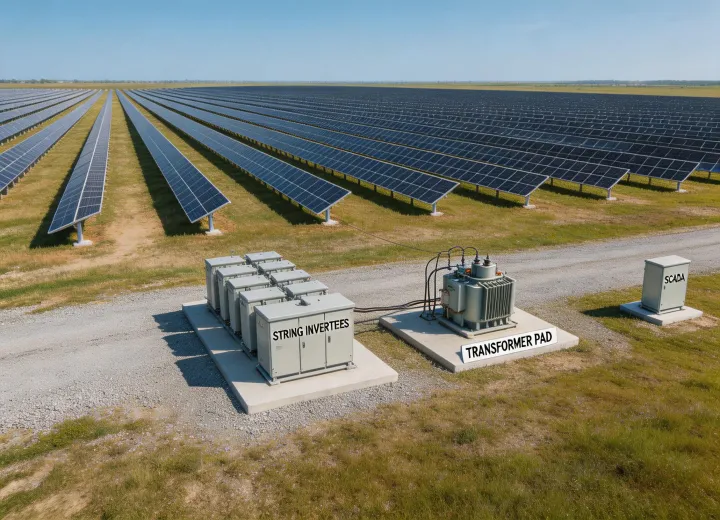
Utility and developer portfolios

Developers look for repeatable commissioning, grid-code documentation, spare strategy, and production reporting across many sites. The conversation shifts from one inverter to a fleet operating model.

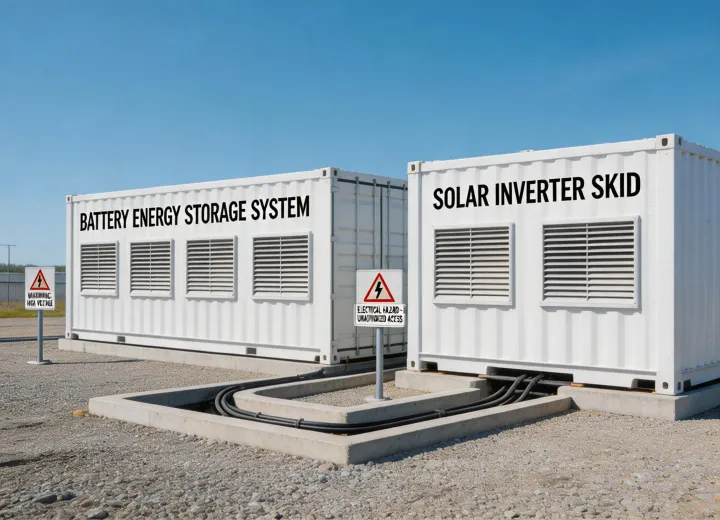
Solar battery storage project

Battery storage and resilience

Storage applications require usable kWh, reserve logic, LFP safety documentation, thermal management, and round-trip efficiency assumptions. Planning should include dispatch goals before procurement.

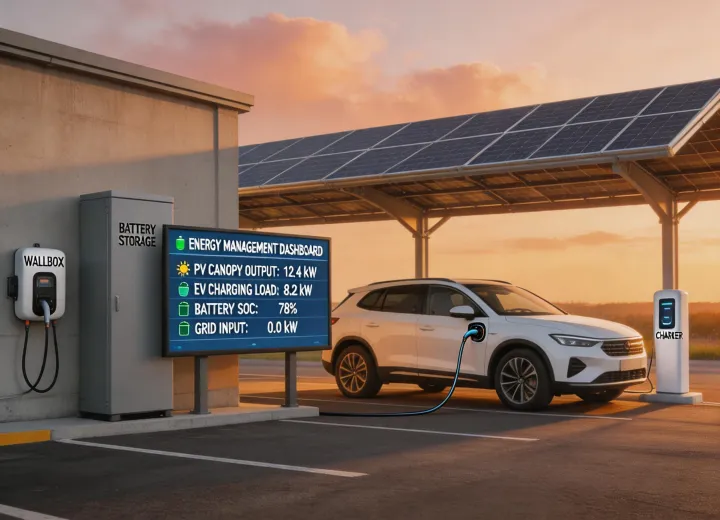
EV charging with solar

EV charging and load coordination

Vehicle charging changes building load behavior. A solar-aware plan considers peak demand, circuit capacity, charging windows, vehicle schedules, and potential bidirectional charging pathways.

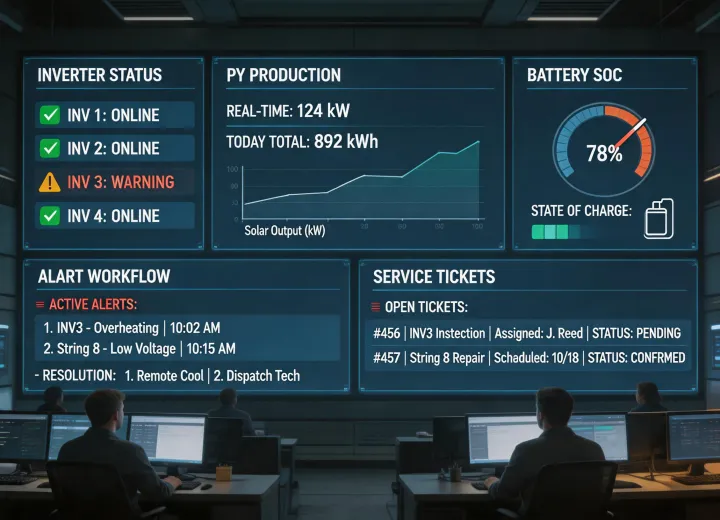
Monitoring operations center

Monitoring and O&M

Fleet visibility helps teams identify production drift, communication outages, alarm clusters, and firmware tasks. The value appears when the dashboard is connected to the service process.

6application families
4core data streams: PV, battery, EV, grid
3buyer groups: installer, owner, operator
1connected energy workflow
Selection Considerations

String inverter vs. microinverter: which architecture fits the project?

Residential and small commercial solar projects can be designed around either string inverters or microinverters. Each architecture has documented trade-offs in cost, shading tolerance, maintenance, and rapid-shutdown compliance. Procurement teams asked us to publish both arguments side by side rather than steer every customer toward one answer.

String Inverter (with optional MLPE)

Lower per-watt cost, single point of maintenance, and high CEC efficiency (often 97%+ weighted). Combined with module-level optimizers, can deliver granular monitoring and meet NEC 690.12 rapid shutdown. Best suited to large unshaded rooftops and ground arrays.

Microinverter

Module-level MPPT recovers production lost to partial shading and module mismatch. DC voltage stays under 80 V at the module, which is inherently safer for fire response. 25-year product warranty matches the module warranty horizon. Better fit for complex roofs or sites with shading.

Solaredge can can provide CEC efficiency curves, MPPT voltage windows, and rapid-shutdown compliance documents (UL 1741 SA / IEEE 1547-2018) so the architecture choice can be justified in the design package.

Match the product conversation to the real site application.

Share your project type, region, electrical constraints, and monitoring expectations. Solaredge will help identify the right planning questions before product comparison narrows too quickly.

Discuss Your Application