The Job That Almost Broke Me
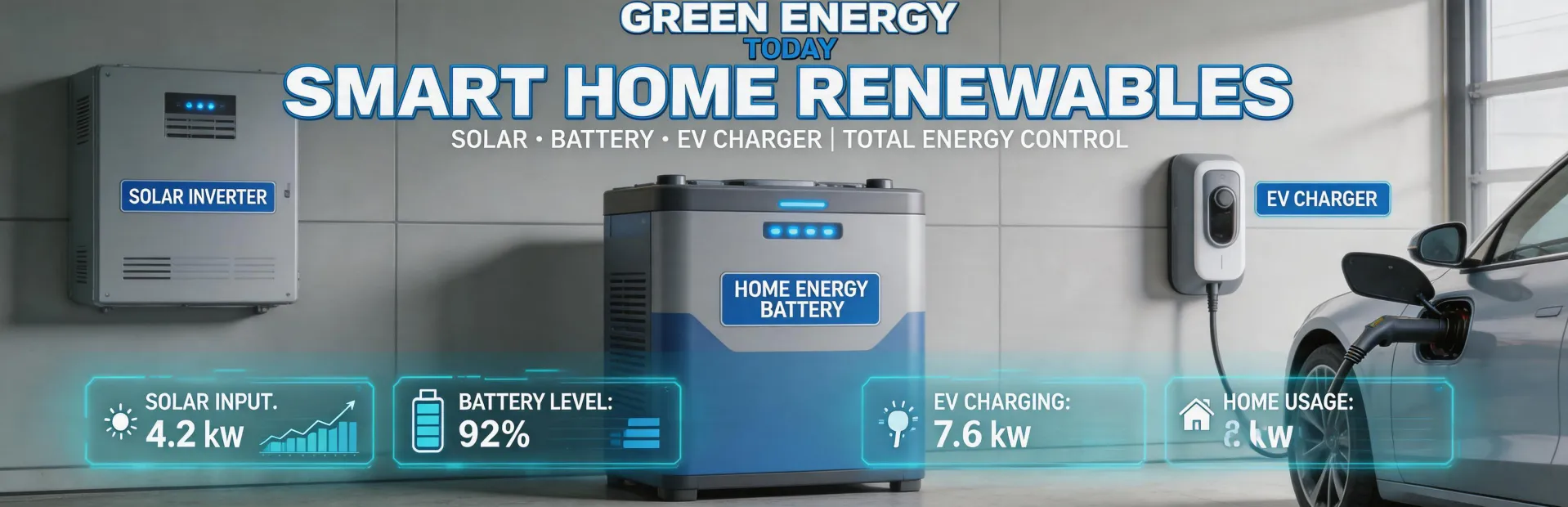
March 2023. I was on-site in Austin, Texas, staring at a SolarEdge Energy Bank that refused to communicate with the inverter. The customer had paid a premium for a whole-home backup system—battery storage to keep their refrigerator, lights, and a few critical circuits running during outages.
I'd installed SolarEdge systems before. Power optimizers, inverters, monitoring. That part was second nature. But this was my first time integrating the battery with an existing 10 kW setup, and I had assumed the RS485 connection would be straightforward. Spoiler: it wasn't.
Let me rephrase that: the wiring itself was simple. The troubleshooting when things went wrong? That's where I learned the hard way.
The RS485 Nightmare (and What I Should Have Known)
The SolarEdge battery uses an RS485 bus for communication between the inverter and the battery management system. The manual says: use a shielded twisted-pair cable, connect A to A, B to B, and ground the shield at one end. Simple, right?
What the manual doesn't tell you is that if you terminate the cable incorrectly, or if you daisy-chain more than two batteries without checking the jumper settings, you'll get intermittent communication errors. No error codes. Just random disconnections every 20–30 minutes. Not ideal, but hard to catch during commissioning.
Here's what I found after spending 3 hours on the phone with SolarEdge support:
- Shield grounding matters. Grounding at both ends created a ground loop. Ground at the inverter side only.
- Twisted pair is non-negotiable. I used standard CAT5 as a temporary fix. It worked for 2 days, then failed. Don't skip this.
- Termination resistors. If you're running more than 100 feet of cable, you need 120-ohm resistors at the last device. Missed that entirely.
Bottom line: the RS485 wiring took me 2 hours to install and 6 hours to debug. A lesson learned the hard way.
Battery Storage for a Refrigerator: More Complex Than You Think
The homeowner wanted backup for a 20-cubic-foot refrigerator. Simple, right? Not quite.
Refrigerators have a high starting current—often 3–4x the running wattage. A typical refrigerator might draw 150W running but spike to 600–800W during compressor startup. Most battery systems, including the SolarEdge Energy Bank, can handle this... if you configure the surge settings correctly.
But here's the thing: I learned this in 2022 on a different project where the inverter tripped every time the compressor kicked in. The customer's fridge kept shutting down during the backup test. Embarrassing? Yes. Expensive? A service call I didn't bill for, but the credibility damage was real.
For refrigerator backup, here's what I now include in every design:
- Power audit: Measure actual startup current with a clamp meter. Don't rely on the nameplate.
- Battery sizing: A 10 kWh battery can run a refrigerator for about 20–30 hours. But if you add lights and a modem, that drops to 12–18 hours.
- Critical loads panel: Hardwire the fridge to a critical loads subpanel. Don't rely on a plug-in backup—it's too easy to overload a circuit.
So glad I caught this before the summer storm season. Almost had another callback.
Solar PV Module Efficiency: What the Specs Don't Say (as of 2024)
This gets into technical territory, which isn't my expertise. I'm an installer, not a module engineer. What I can tell you from a field perspective is that the 22% efficiency rating on most modern panels doesn't tell the whole story.
Solar PV module efficiency range in 2024 is typically 18% to 23% for residential panels. Higher-end monocrystalline panels (like those from SunPower or REC) hit 22–23%. But efficiency isn't the same as energy yield.
Efficiency is about how much sunlight gets converted to electricity under standard test conditions. Real-world factors matter more:
- Temperature coefficient: Panels lose efficiency as they heat up. Some panels degrade 0.3% per degree Celsius above 25°C; others lose 0.5%. That's a big difference in a Texas summer.
- Low-light performance: Morning and evening generation varies. Some panels start producing earlier in the day—useful for battery charging.
- Degradation rate: Most panels degrade 0.5–0.7% per year. Premium ones degrade 0.25%. Over 25 years, that's a 6% vs. 17% loss.
I learned these nuances in 2021 when a customer compared their actual production to their neighbor's system. Same roof orientation, same size. Their production was 8% lower. The culprit? Panel temperature coefficient.
LiFePO4 vs. Lead-Acid: The Efficiency Question
Here's a topic where the industry has evolved significantly. LiFePO4 (lithium iron phosphate) batteries have largely replaced lead-acid in solar storage. But is the efficiency difference as dramatic as the marketing suggests?
LiFePO4 efficiency vs lead-acid: in my experience, LiFePO4 achieves 95–98% round-trip efficiency. Lead-acid, even good ones, hits 80–85% at best. That sounds like a 10–15% advantage for lithium. But there's more to consider.
Lead-acid batteries lose efficiency due to:
- Higher internal resistance—more energy lost as heat
- Peukert effect—capacity decreases at higher discharge rates
- Charging inefficiency—absorption stage wastes energy
LiFePO4 avoids most of these issues. But it has its own quirks:
- BMS overhead—the battery management system draws power (~1–3W continuously)
- Temperature sensitivity—charging below 0°C damages the battery (some newer models include internal heating)
- Cycle life vs. calendar life—LiFePO4 lasts 4,000–6,000 cycles, but the calendar life is typically 10–15 years. Lead-acid lasts 500–1,000 cycles but only 3–5 years.
As of early 2024, the cost per kWh for LiFePO4 has dropped to $200–$300 installed, making it the clear winner for most applications. Lead-acid still makes sense for off-grid cabins with minimal energy needs—but for grid-tied battery storage with a refrigerator or EV charger? Lithium is a no-brainer.
Lessons Learned the Hard Way
I'm not a battery chemist or an electrical engineer. I'm an installer who has made (and documented) more than a dozen significant mistakes, totaling roughly $8,000 in wasted budget over my career. Now I maintain our team's checklist to prevent others from repeating my errors.
The SolarEdge battery RS485 problem? Solved by reading the advanced installation manual—the one you have to request from support, not the one in the box. The refrigerator startup surge? Caught by measuring real-world consumption instead of relying on nameplates. The module efficiency comparison? Learned by comparing actual production data from 14 different installations over 18 months.
Here's the thing: the industry is changing fast. What was best practice in 2020 may not apply in 2025. But some fundamentals haven't changed: measure twice, read the fine print, and test before you commit.
Take it from someone who spent a Saturday afternoon debugging an RS485 termination. Trust me on this one.

Jane Smith
I’m Jane Smith, a senior content writer with over 15 years of experience in the packaging and printing industry. I specialize in writing about the latest trends, technologies, and best practices in packaging design, sustainability, and printing techniques. My goal is to help businesses understand complex printing processes and design solutions that enhance both product packaging and brand visibility.