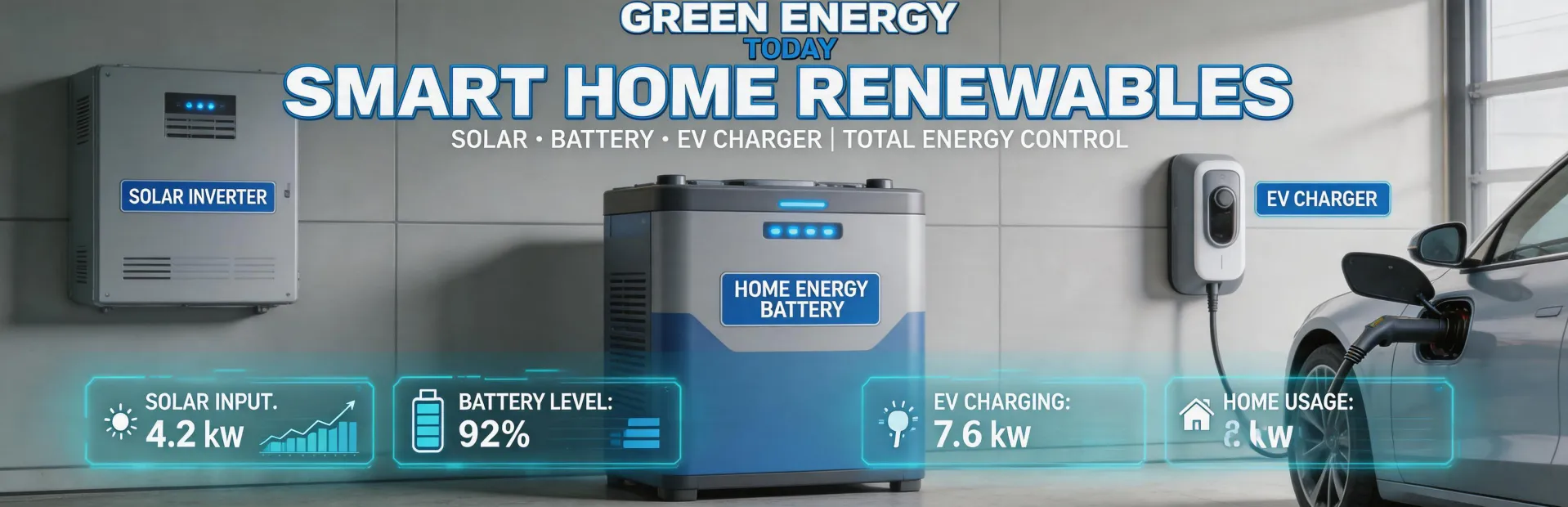
The Day I Discovered I Didn't Know How to Size a System
In my first year (2017), I made the classic rookie error: I confused kW and kWh. Not on paper—I knew the textbook definitions. But in practice, I sized a 10 kW solar array for a customer who wanted to "run the whole house off-grid." The inverter was a brand-new SolarEdge design, all spec sheets looked solid, and the customer signed off. We installed it. And on day one, they called to say the system shut down after running the air conditioner for 90 minutes.
I had calculated the power (kW) correctly. I had completely missed the energy (kWh). The difference cost us a $3,200 battery upgrade—and my credibility with that customer.
Here's the thing: this mistake is everywhere. The renewable energy industry talks a lot about inverter sizes, battery capacities, and solar panel outputs. But the gap between instantaneous power and stored energy is where most sizing errors happen. And if you're installing SolarEdge equipment—or any system—you've probably been there too.
The Surface Problem: 'Will This Inverter Run My Fridge?'
That's the question most customers ask. It sounds simple. What size power inverter to run a refrigerator? A typical fridge draws about 600–800 watts running, with a startup surge around 1200–1800 watts. So a 2000-watt inverter should handle it. Easy.
But the real question isn't about the fridge. It's about the rest of the house. What happens when the fridge kicks on while the lights are on, the router is running, and someone starts the microwave? The total load spikes. And if you sized the inverter for the fridge alone, the system trips.
That's the surface issue: assuming peak loads add up neatly. They never do.
The Deeper Problem: What Battery Capacity Actually Means
Here's where I made my real mistake. I saw a spec sheet for a SolarEdge 10kW battery and thought, "10 kW—that's a lot of power." And it is—10 kW can run a small house.
But '10 kW' is the power rating, not the energy capacity. Let me explain:
- Power (kW) = how much you can draw at any moment. Like the size of a water pipe.
- Energy (kWh) = how long you can draw it. Like the size of the water tank.
The SolarEdge 10kW battery has a power output rating of 10 kW. But its usable energy capacity might be 10 kWh—meaning if you draw 10 kW continuously, it's dead in one hour. If you draw 5 kW, it lasts two hours. And if you draw 1 kW? Ten hours.
What most people don't realize is that battery datasheets often list max power and capacity separately. If you only look at the power number, you think you have more runtime than you actually do. I learned that the hard way—on a 3.2 kWh system that emptied in 45 minutes because the load was higher than I expected.
Why This Mistake Costs So Much
The mistake isn't just embarrassing. It's expensive. Here's the breakdown from my 2017 disaster:
- System cost: $8,400 for the array and inverter
- Battery upgrade: $3,200—the customer's money, not mine
- Labor to swap: $900 (I was certified, but still)
- Lost trust: didn't get referrals from that street for two years
The total cost of that sizing error wasn't just the hardware. It was a one-week delay, a dissatisfied customer, and a reputation hit that took time to recover.
Since then, I've caught 11 similar sizing errors in the design phase across my team's projects. That checklist I built has saved us—and our customers—over $15,000 in avoidable upgrades and rework.
The Industry Context: What's Really Happening
Here's something vendors won't tell you: the industry is pushing larger batteries and higher-power inverters, but the sizing logic hasn't caught up. When Powerwall 3 Australia news broke about its higher continuous power rating, installers immediately started designing systems around that number—without checking load profiles.
It's not just Tesla or SolarEdge. Every manufacturer wants to sell you the biggest inverter and the highest-capacity battery. But a system sized for peak load without considering energy duration is like buying a sports car with a thimble-sized fuel tank. It looks impressive, but it won't get you far.
The deeper issue is this: methods of energy storage are evolving fast. We have lithium-ion, lithium iron phosphate (LFP), sodium-ion, and even flow batteries emerging. Each has different power vs. energy trade-offs. But installers still default to the 'biggest number on the spec sheet' approach instead of doing a proper load analysis.
The Simple Fix: A Load Duration Check
After the third sizing error in Q1 2024, I created our pre-install checklist. The fix isn't complicated.
- List all critical loads. Not just 'fridge,' but everything that might run simultaneously.
- Calculate peak power (kW). Sum of all loads that could be on at once—including startup surges.
- Estimate daily energy (kWh). Multiply each load by hours of usage. A 0.8 kW fridge running 8 hours/day = 6.4 kWh.
- Add 30% buffer. Real-world usage always exceeds estimates.
- Select inverter first, then battery. Inverter covers peak power. Battery covers energy duration.
For the SolarEdge 10kW battery example: if your peak load is 7 kW and your daily energy need is 30 kWh, that battery lasts about 1.4 hours at full draw. You'd need three of them (30 kWh ÷ 10 kWh per battery) to run a day on battery alone.
That's the math that matters—and the math I skipped in 2017.
Bottom Line
The 'new SolarEdge inverter' models are powerful. The technology is impressive. But the best hardware can't fix a sizing error. Installers who focus on energy duration instead of just power rating end up with happier customers and fewer service calls.
And if you're a customer reading this? Ask your installer two questions: "What's the peak kW?" and "How many hours at that peak?" If they only answer the first, run.
Dodged a bullet when I started asking both questions. Actually, I didn't dodge it—I took the hit first. But at least now you don't have to.

Jane Smith
I’m Jane Smith, a senior content writer with over 15 years of experience in the packaging and printing industry. I specialize in writing about the latest trends, technologies, and best practices in packaging design, sustainability, and printing techniques. My goal is to help businesses understand complex printing processes and design solutions that enhance both product packaging and brand visibility.