-
Checklist Overview: The 4-Step Evaluation for SolarEdge
- Step 1: The Market Signal — Why 2023 Shipments Matter
-
Step 2: The SolarEdge Energy Bank 10 kWh — A Practical Assessment
- Step 3: Niche Tech Demands — Bifacial Panels, 36V Inverters, and Wind
-
Step 4: The Honest Limitations — When SolarEdge Isn’t the Right Fit
-
Final Notes and Common Mistakes
Look, I’ve been in the renewable energy procurement game for a while—mostly for commercial and industrial projects. I’ve handled everything from small-scale rooftop installs to multi-megawatt ground-mounts. Over the last few years, I’ve evaluated SolarEdge for dozens of projects. Here’s the thing: they’re a major player, but they’re not a fit for everyone.
This isn’t a general review. It’s a checklist for B2B buyers like me: installers, system integrators, and project developers who need to make a data-driven decision. We’re going to walk through four critical checkpoints, from shipment credibility to battery specs, and I’ll tell you where I’ve seen people go wrong.
Checklist Overview: The 4-Step Evaluation for SolarEdge
Before you spec a system, run through these four steps. They’re based on my experience with about 50+ projects and a lot of late-night data reviews.
- Verify the market signal: Does the shipment data back up the hype?
- Understand the battery play: Is the Energy Bank 10 kWh what you need?
- Check the tech limits: How does it handle niche demands like bifacial or 36V?
- Know when to walk away: The honest limitations.
Step 1: The Market Signal — Why 2023 Shipments Matter
When I’m evaluating a vendor for a large project, the first thing I check isn’t the marketing. It’s the shipment data. In 2023, SolarEdge shipped 12.6 GW of inverters (Source: SolarEdge Q4 2023 earnings report). That’s a massive number. For context, that’s roughly enough to power 2-3 million homes if you average 5kW per system.
But here’s my honest take: shipment volume isn’t everything. It tells you they have scale and supply chain muscle. It doesn’t tell you if their reliability is good or if their support team responds on a Friday afternoon. I’ve seen big shippers leave contractors hanging. That said, for toB buyers, high volume usually means better availability and more competitive pricing. My experience is based on projects in the US and Europe. If you’re working in a region with less established distribution, your experience might differ.
What to Check at This Step
- Confirm the shipment data against the official earnings call transcripts (they’re public).
- Ask your distributor about local stock levels, not just company-wide shipments.
- Don’t assume high volume equals high quality in every market segment.
Step 2: The SolarEdge Energy Bank 10 kWh — A Practical Assessment
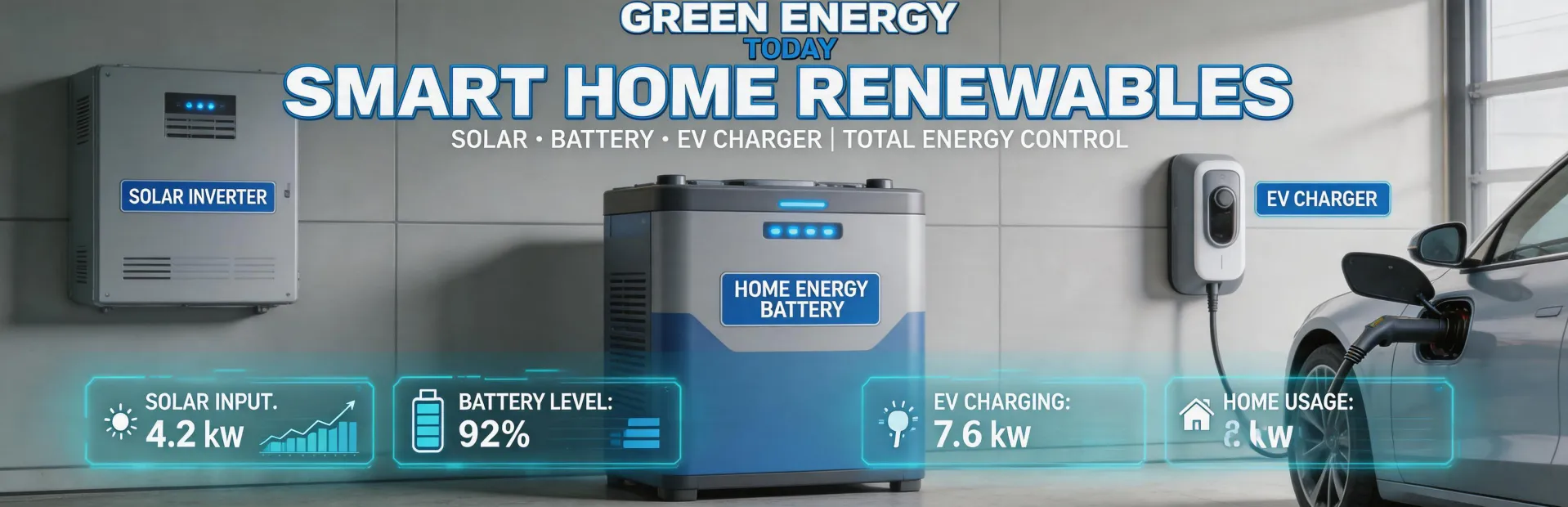
The SolarEdge Energy Bank 10 kWh is their dedicated home battery. In my first year in this industry, I made a classic mistake: I assumed all energy storage products were basically the same. Cost me a redesign when the battery couldn’t handle the load profile we needed.
The Energy Bank uses lithium-ion NMC chemistry. It has a usable capacity of about 9.7 kWh and offers backup power during outages. For a standard residential install with a SolarEdge inverter, it integrates cleanly.
But here’s where the checklist gets specific. I recommend this battery for:
- Homes with existing SolarEdge inverters (it saves on wiring and commissioning).
- Customers who want a single-app ecosystem for monitoring everything.
- Projects where backup power is a nice-to-have, not a critical requirement.
However, if you’re dealing with a site that needs high continuous discharge (like for a home workshop), you might want to look at LFP-based options from competitors. The Energy Bank’s continuous output is 5 kW, which is standard but not stellar. I have mixed feelings about the pricing—it’s competitive on a per-kWh basis, but the installation labor is higher than some simpler AC-coupled systems.
Step 3: Niche Tech Demands — Bifacial Panels, 36V Inverters, and Wind
This step is for projects that deviate from the standard residential install. I’ve seen three common questions that trip people up.
Bifacial Solar Panels with SolarEdge
SolarEdge’s power optimizers can handle bifacial modules, but there’s a catch. The optimizer needs to be sized correctly for the module’s total STC rating. Your standard optimizer might clip the output if the backside gain is high. In March 2024, I had a project where we didn’t account for the additional current from a bifacial module. We had to swap out 12 optimizers two days before the interconnection deadline. The surprise wasn’t the hardware cost—it was the labor and the schedule hit.
For bifacial, I’d recommend using SolarEdge’s higher-rated optimizers (like the S1200 or S1400) and confirming with their technical support. Never assume compatibility from a datasheet alone.
The 36V Power Inverter Question
Someone always asks about 36V inverters for off-grid or specialized applications. SolarEdge doesn’t make a pure 36V inverter. Their standard line is high-voltage DC (up to 480V). If you absolutely need 36V output, you’re looking at a different product category—like Victron or a MicroPower system. I’ve seen rookie integrators try to hack a SolarEdge system down to 36V with a transformer. It’s messy, inefficient, and voids the warranty. Don’t do it.
The Wind Turbine Question
I get asked this a lot: “Are wind turbines economical?” The answer is complicated. For a single-turbine install on a farm, the economics are marginal at best in most residential settings. For commercial-scale wind, it’s a different story. But if you’re mixing a wind turbine with a SolarEdge solar system, you’ll need a separate wind inverter. SolarEdge’s architecture doesn’t directly support AC-coupled wind. You can AC-couple the wind inverter on the load side, but it’s not a unified system. I only recommend this for customers who are deeply committed to a multi-source setup and understand the inefficiency.
Step 4: The Honest Limitations — When SolarEdge Isn’t the Right Fit
I’m a big fan of SolarEdge for certain use cases. But I try to be honest about where it falls short.
- Oversized commercial systems (1MW+): SolarEdge shines in the 10kW-500kW range. Above that, a central inverter (like from SMA or Fimer) often makes more financial sense, especially for ground-mounts with minimal shading.
- Ultra-budget projects: The upfront cost of power optimizers per panel adds up. For a simple, south-facing, unshaded roof, a string inverter is cheaper and simpler. You’re paying for optimization you might not need.
- Non-inverter replacements: If a customer wants to replace an existing inverter that isn’t SolarEdge, the whole system often needs a rewire. That’s a big labor cost. My experience is based on new builds and full-system retrofits. I can’t speak to how this applies to partial upgrades.
Final Notes and Common Mistakes
Here’s where I see people mess up:
- Ignoring the voltage range: SolarEdge inverters have a specific MPPT voltage window. If your string voltage is too low, the inverter won’t start. If it’s too high, it clips. Use their design tool religiously.
- Forgetting the network: The monitoring is only as good as the WiFi. For commercial sites, I always spec a cellular gateway. You’d be surprised how many installers skip this and then blame the manufacturer when the app shows offline.
- Skipping the communication with the site owner: I once said “we’ll use standard monitoring” to a client. They heard “we’ll ignore your request for granular data.” Result: a week of back-and-forth to reconfigure the portal.
Lastly, a word on the broader market. The industry is moving toward more integrated DC-coupled systems. SolarEdge’s approach is mature, but keep an eye on newer architectures from Enphase and Tesla. As of early 2025, SolarEdge remains a strong choice for the majority of residential and small commercial projects. But always, always verify current pricing and availability with your distributor—the market moves fast.

Jane Smith
I’m Jane Smith, a senior content writer with over 15 years of experience in the packaging and printing industry. I specialize in writing about the latest trends, technologies, and best practices in packaging design, sustainability, and printing techniques. My goal is to help businesses understand complex printing processes and design solutions that enhance both product packaging and brand visibility.