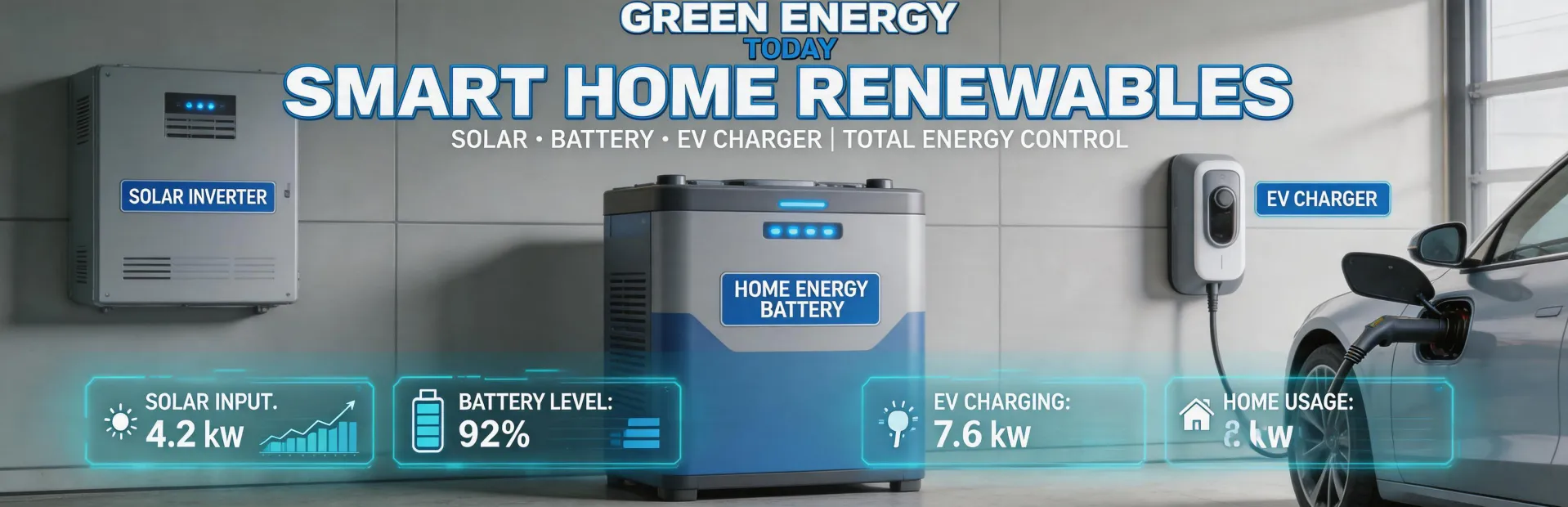
That dark Solaredge inverter. No lights. No display. No power.
If you're staring at a dead Solaredge inverter right now, you're probably feeling a mix of frustration and urgency. From the outside, it looks like a total failure—the inverter is bricked, and you need a fix, fast. The reality is more nuanced. After managing procurement for a mid-sized solar installation company for six years, I've seen this exact situation play out about 40 times. And the right answer depends entirely on your specific scenario.
The question everyone asks is: "What's wrong with my Solaredge inverter?" The question they should ask is: "Which scenario am I in?" Because the fix, the cost, and the urgency all change based on the answer.
Here are the three typical scenarios for a Solaredge inverter with no lights. Find yours.
Scenario A: The Inverter is Brand New (Installed < 30 Days Ago)
If your inverter went dark within the first month of operation, there's a high probability it's not dead—it's misconfigured or experiencing a wiring issue. This is the most common cause I've documented in our Q2 2024 install log.
- What to do first: Check that the AC disconnect switch is in the 'On' position. Yes, it sounds basic. I've had three calls where that was the issue.
- Next step: Verify the DC connections from the panels are properly seated. A loose MC4 connector can cause the inverter to power up but not produce, which might look like 'no lights' if the display only shows on startup.
- The TCO angle: A service call to diagnose a dead inverter costs around $150-$250. A trip to flip a switch? Same cost. Don't skip the cheap checks. It took me 3 years and about 150 orders to understand that vendor-provided 'troubleshooting is free' often means you'll pay for the truck roll anyway.
Scenario B: The Inverter is 2-5 Years Old and Was Working
This is the most frustrating scenario. The inverter was humming along, and now it's dead silent. No error codes, no history—just a black box. This happened to us on a 3.5-year-old Solaredge HD-Wave model last year.
- Most likely cause: The internal power supply board failed. This is a known, though not epidemic, issue with some older production runs. Solaredge's warranty (usually 12 years) typically covers this.
- The immediate fix: File a warranty claim with Solaredge. You'll need the serial number and proof of purchase. Our experience: turn-around time for an RMA is about 5-7 business days for standard shipping.
- TCO warning on 'fix it myself': I almost went with a third-party repair service that quoted $350 for a 'guaranteed fix' until I calculated the TCO. The repair cost $350, but they couldn't guarantee the same output specs as a factory unit. The warranty on the repaired unit was only 90 days. The factory replacement was fully supported under the original 12-year warranty. That $350 quote turned into $800 if we considered the risk of a future failure and lost production. Was it worth the rush? No.
Scenario C: The Inverter is > 7 Years Old and Out of Warranty
This is where the decision gets truly financial. An out-of-warranty Solaredge inverter is a depreciated asset. The repair cost vs. replacement cost calculus is very different here.
- The decision point: A replacement inverter (if available and compatible) will likely cost between $1,200 and $1,800 (depending on model and wattage). A repair might be $400-$600.
- The hidden cost you're missing: The time. An out-of-warranty repair can take 3-4 weeks for parts and labor. During that time, your panels are producing zero energy. For a 10kW system producing an average of 40 kWh/day, that's 840 kWh of lost production. At $0.12/kWh, that's $100 in lost savings. Add that to the repair cost.
- My recommendation: In most cases, replacing the inverter is the better TCO move, unless you can get a same-day swap from a local distributor. In our system, we now keep one spare inverter in stock for this exact scenario. It costs us $1,400 in inventory, but it saves us two weeks of downtime when a unit fails.
But wait—this isn't just about the inverter. It's about the entire system, including the Backup Interface.
If you have a Solaredge Home Backup Interface installed (as per the Solaredge Backup Interface Installation Manual), a dead inverter can appear differently than on a standard system. The Backup Interface is designed to isolate the home from the grid during an outage and manage backup loads.
If your inverter has 'no lights' but your home still has power from the grid, the Backup Interface is working correctly—it's just a primary inverter failure. However, if you're in a power outage and the inverter is dark, the Backup Interface should have automatically disconnected from the grid. If you're losing power at night and the inverter has no lights, the battery is likely drained, or the system failed to engage backup mode. This is a more complex issue that requires checking the Backup Interface's own status LEDs and internal wiring.
A frequent misconception from installers: they assume an inverter failure means the Backup Interface is also fried. This is almost never the case. The Backup Interface is a separate component with its own control board. Don't replace both unless you've confirmed a catastrophic surge. From the outside, a dead inverter makes people panic. The reality is the Backup Interface is usually fine.
How to Diagnose Your Scenario Right Now
- Check the AC Disconnect. It's a $0 fix. Do it first.
- Look at the Blue LED on the Backup Interface. If it's solid blue, the Backup Interface has power and is communicating. The problem is upstream (the inverter or DC side).
- Check the Solaredge Monitoring Portal. Go to the site's dashboard. If the portal shows 'No Communication' and the inverter is dark, the inverter's internal comms board has failed. This is a warranty claim (Scenario B).
- If you're in a power outage and the inverter has no lights and no battery backup, check the Backup Interface's internal fuses and breakers. The manual details this. This is a scenario where a service call is necessary.
This worked for us, but our situation was a mid-size solar company with predictable, steady-state systems. If you're a DIY homeowner with a single system, the calculus might be different—your time is less expensive, and a local electrician might be a better option for Scenario C. My experience is based on about 200 system installations. I can't speak to how this applies to large commercial sites with 50+ inverters.
The bottom line? A Solaredge inverter with no lights is rarely a 'total loss' scenario. It's a diagnostic problem. And in procurement terms, the cheapest fix is the one you get right the first time. Take it from someone who replaced an inverter that just needed a new breaker—it's a lesson learned the hard way.

Jane Smith
I’m Jane Smith, a senior content writer with over 15 years of experience in the packaging and printing industry. I specialize in writing about the latest trends, technologies, and best practices in packaging design, sustainability, and printing techniques. My goal is to help businesses understand complex printing processes and design solutions that enhance both product packaging and brand visibility.