I think the industry is asking the wrong question about SolarEdge
I've processed invoices for solar hardware for over five years now—for a regional installer that handles roughly 400 residential and small commercial projects annually. So when people ask me "which inverter brand is best," I kinda roll my eyes. That's the wrong question.
The question should be: does the brand you choose today lock you into a system that works—or one that fights itself?
And that's why I've shifted my opinion on SolarEdge. Sometime around mid-2023, I stopped seeing them as "the inverter company with power optimizers" and started seeing them as the platform company. It's a different category altogether.
Most buyers focus on power specs and miss the ecosystem tax
Here's what I mean. When I'm sourcing parts for a new install—say, a 7.6 kW system with a battery—the natural instinct is to cherry-pick the best individual components. A Fronius inverter here, a third-party battery there, maybe a separate EV charger from a different vendor. That's how we did it in 2020.
But what's the hidden cost of that approach? It's not just procurement complexity (though managing 4 vendors instead of 1 adds real overhead for my team). It's the compatibility risk and monitoring fragmentation.
I had a situation last year where a customer wanted a SolarEdge inverter with a non-certified battery. The installer was confident it would work—'it's just a battery.' Except when the system had a communication fault, neither SolarEdge support nor the battery manufacturer would take responsibility. The homeowner ended up with a $1,200 service call and a system that still didn't report properly in one app.
The upside of an integrated ecosystem is support accountability. The risk of a DIY approach is you become the integrator—and the fall guy when things don't talk to each other.
The DC EV charger is a smarter play than most realize
I'll admit, when SolarEdge announced their DC-coupled EV charger, I was skeptical. "Great, another charger standard," I thought. But the more I looked into it, the more it made sense from a design perspective—and from a purchasing perspective.
Most buyers focus on the EV charger's amperage or cable length. They completely miss the installation overhead of an AC charger with a solar + battery system. With an AC charger, you're adding a separate circuit, a separate inverter for the car, and separate monitoring.
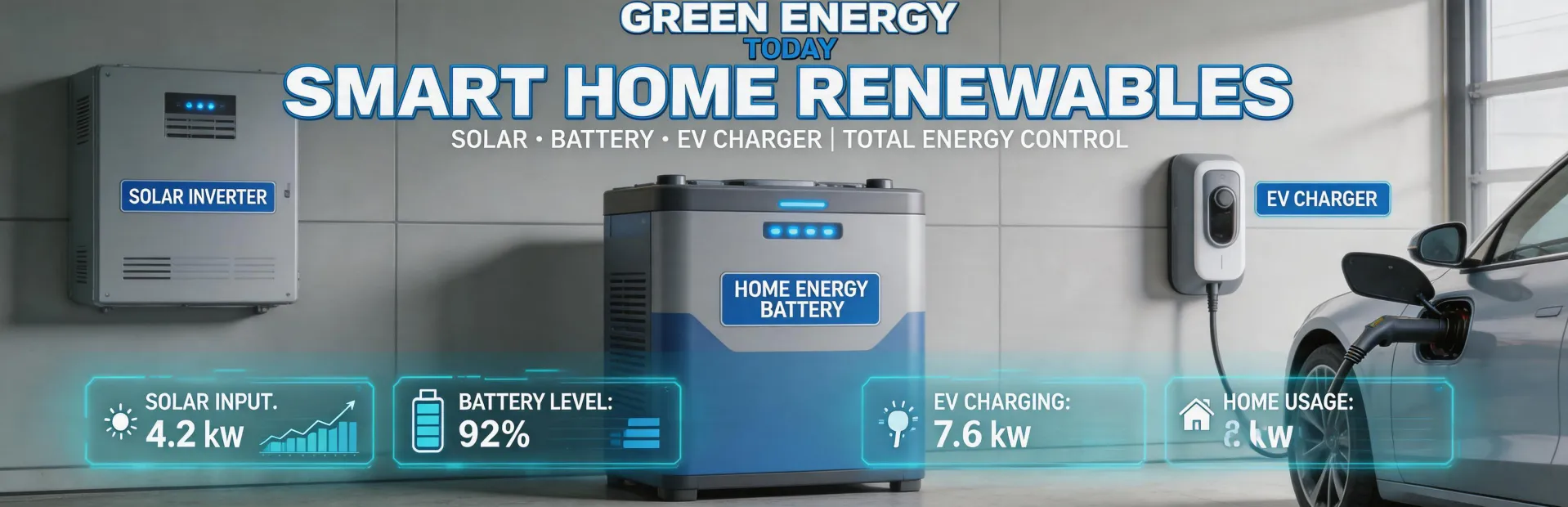
The SolarEdge DC charger shares the existing inverter's hardware. For my installers, that means one less high-voltage disconnect to wire. For the homeowner, it means the EV charging shows up in the same app as the solar production and battery status. That's not a minor convenience—it's what makes the system feel coherent.
Don't hold me to the exact numbers, but the last time I priced out a 7.6 kW system with a home battery and an EV charger, the SolarEdge ecosystem approach came in about 8-12% higher on materials. But my installers estimated 15-20% less labor because of the reduced wiring complexity. Net-net, the total installed cost was comparable—and the customer got a unified monitoring experience.
So the "premium" on integrated hardware was mostly a myth in our case.
Battery compatibility is more nuanced than 'works with SolarEdge'
This is where I've changed my tune. In 2021, I would have told you to buy the cheapest battery that claims compatibility with your inverter. By 2024, I've learned the hard way that compatibility isn't binary.
Yes, SolarEdge has a list of compatible batteries. Yes, they test integration. But 'compatible' can mean different things:
- Full integration: The battery appears in the SolarEdge monitoring portal, firmware updates are managed by SolarEdge, and warranty support is streamlined.
- Basic integration: The battery works for power, but may not report state of charge accurately, may require separate monitoring, and firmware issues become a finger-pointing exercise.
- Experimental integration: A forum post or installer blog claims it works. That's not a spec.
The question everyone asks is: "which batteries are compatible with my SolarEdge inverter?" The question they should ask is: "which batteries are certified for full integration in the SolarEdge monitoring platform?"
I'm not 100% sure on every model, but as of mid-2024, the LG Chem RESU, the Tesla Powerwall (with specific gateway setups), and SolarEdge's own Home Battery are the ones I've seen with reliable full integration. Third-party batteries from Generac or Sonnen? Probably work. But I've seen enough support tickets to say: buy the certified integration list, not the forum recommendation.
But doesn't this lock you in? Sure. That's the point.
The common objection I hear is: "If I buy SolarEdge for the inverter, battery, and EV charger, I'm locked into their ecosystem. What if something better comes along?"
That's a fair concern. And five years ago, I'd have agreed. Before I saw how much time my installers lost troubleshooting mismatched components, I thought integration was a gimmick to restrict choice. But here's the thing: the 'best' individual component today will be outdated in three years anyway.
What matters more is: when a firmware update breaks communication, who fixes it? When a customer calls with a monitoring issue, who answers? When the system grows (add more panels, bigger battery), does the existing hardware adapt or require replacement?
The fundamentals haven't changed—you still need reliable hardware that meets code. But the execution has transformed. In 2025, buying solar hardware isn't just about the inverter spec sheet. It's about whether the ecosystem reduces or increases the number of vendors you fight with when something goes wrong.
SolarEdge has its flaws. Their customer support response times can be slow during peak seasons. Their pricing isn't the cheapest—and they'd be the first to tell you that's by design. But for my money, the ecosystem approach has saved my team more headaches than it's created.
So yeah, I think the industry needs to stop asking "which inverter is best?" and start asking "which system is most integrated?" Because that's the question that predicts whether your install goes smoothly or turns into a three-vendor blame game.

Jane Smith
I’m Jane Smith, a senior content writer with over 15 years of experience in the packaging and printing industry. I specialize in writing about the latest trends, technologies, and best practices in packaging design, sustainability, and printing techniques. My goal is to help businesses understand complex printing processes and design solutions that enhance both product packaging and brand visibility.