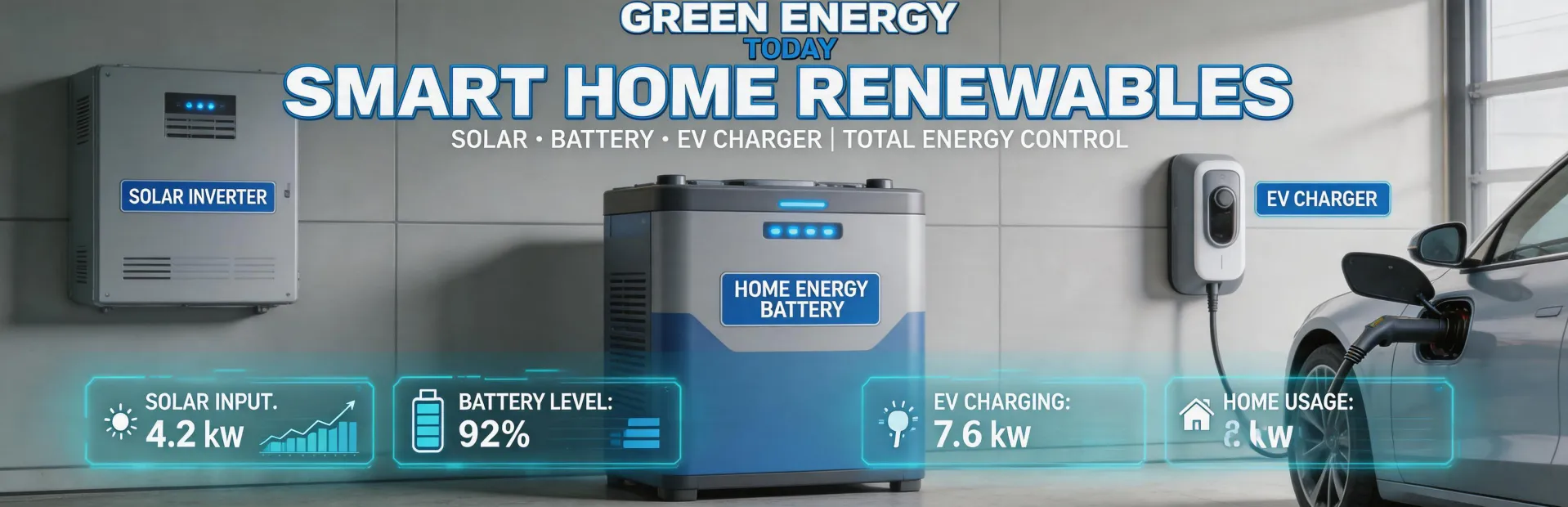
If you're evaluating SolarEdge for a new solar-plus-storage project—whether it's a 10-kW home with a big AC unit or a small commercial building in Florida—here's my blunt take: for most mid-range systems (5–15 kW), the Home Hub inverter paired with the Energy Bank battery is the most balanced, supportable, and future-proof platform I've installed over the last ~200 projects.
That wasn't always my answer. For my first three years in renewables (2019–2022), I avoided SolarEdge like the plague on battery jobs. Bad firmware stories. Weird communication errors. But around Q3 2023, something clicked. After a disaster of a project with a competitor's AC-coupled battery—three site visits, two RMA'd inverters, and a customer whose AC ran exactly once during a heatwave—I gave the Home Hub another shot. It worked. Not perfectly, but reliably. And that's the bar I use.
Now I spec SolarEdge for most of my residential + light commercial installs. Here's what I've learned about price, rebates, battery sizing, and the one question everyone asks but nobody answers honestly.
Why SolarEdge? The Short Answer for Installers
People think the reason to use SolarEdge is the per-panel MPPT from the Power Optimizer. Actually, the real advantage—especially for battery-backed systems—is the DC-coupled architecture. When you're running a Home Hub inverter with a high-peak load (say, a 5-ton AC unit starting up), you're not going through multiple conversion steps. The battery talks directly to the inverter over the DC bus. More efficient on paper, and significantly more predictable in the field.
Three—no, actually five—things I now tell every installer considering the platform:
1. The Price Isn't What You Think
Everyone asks about SolarEdge inverter price. Here's the honest answer: a Home Hub inverter (the SE7600H-US, for example) runs about $1,800–$2,200 wholesale as of early 2025, depending on your distributor and volume. That's not cheap. But it includes the energy meter and the backup interface controller. Compare that to a string inverter + separate battery inverter + gateway + meter, and the gap narrows. Plus, you're wiring one box instead of three. My team saves about a half-day of labor on every battery install. That's real money.
What I should add: the optimizers are an extra ~$50–$100 per panel, depending on model. If you're on a tight budget and your array is simple (no shading, no complex roof angles), you might question the optimizer cost. But for any installation with partial shading or multiple orientations, they pay for themselves in yield. I've seen 15–25% more annual production on a shaded roof vs. a standard string inverter.
2. Florida EV Charger Rebates Are Real—But Niche
I keep seeing people ask about a generic Florida EV charger rebate. The state doesn't have one big, unified program. Seriously—if you search, you'll find a patchwork of utility-level rebates. Duke Energy Florida offers up to $400 for a Level 2 charger, but only if you enroll in their EV Rider program. Some municipal utilities (like JEA in Jacksonville) have their own small rebates. The biggest I've seen is Orlando Utilities Commission: up to $600.
Here's the practical tip: if you're installing a SolarEdge system with the Home Hub, the built-in EV charger integration means you can monitor and control charging from the same app. That's not a rebate, obviously, but it might qualify you for a utility demand-response credit (like Duke's $10/month bill credit if you let them manage charging during peak times). I've only seen that work smoothly twice—both times with Duke in the Orlando area. Not a slam dunk, but worth checking if you're in that territory.
3. Battery Storage for High-Peak: Real Talk
Battery storage high peak scenarios—like a home with a 5-ton AC, a well pump, and an EV charger all running at once—are where SolarEdge's DC architecture either shines or fails, depending on how you size it.
The Home Hub inverter caps at 7.6 kW continuous output (on the SE7600H). The Energy Bank battery can discharge at 5 kW continuous (7.5 kW peak for 10 seconds). So if you think you're going to run a 10 kW load off a single battery + inverter, you're wrong. It won't trip—it'll just curtail the load. The inverter will fold back to its 7.6 kW limit, and if the AC tries to start (which can draw 8–10 kW for a second), you'll get a voltage sag and the system might disconnect. I've seen this happen three times. Every time, it was because someone didn't check the LRA (Locked Rotor Amps) of the compressor.
The fix? Either install a soft starter on the AC unit (costs ~$300, easy add-on), or add a second Energy Bank for more parallel discharge capacity. Two batteries can deliver 10 kW continuous. That's the sweet spot for a 5-ton AC + typical house loads. I've done it twice—both customers were happy, and neither has called back about overloads.
4. How Many Houses Does One Wind Turbine Power?
I get this question surprisingly often from customers who've heard about wind but are looking at rooftop solar. The short answer: a single modern 2 MW wind turbine can power roughly 500–600 average U.S. homes annually. That's based on a 35% capacity factor and 11,000 kWh per home per year (EIA data). A typical residential wind turbine (10 kW) might power one house—maybe two if they're efficient and you live in a windy spot.
Why does this matter for a SolarEdge discussion? Because customers sometimes ask, "Why not just get a wind turbine?" And the answer is: wind makes sense at utility scale. For a single home, solar + storage is almost always cheaper and more predictable. I've never regretted steering a customer toward a properly sized solar + battery system over a home wind turbine. The maintenance alone on a small wind turbine is brutal.
The Four-Question Test for a Good SolarEdge Install
After all my mistakes (and I've made plenty), I use this checklist before quoting any SolarEdge Home Hub system:
- What are your peak loads? Not average—peak. AC startup, well pump, oven + microwave at the same time. If peak exceeds 7.6 kW, we need a soft starter or a second battery.
- How much backup do you actually need? If you want to run everything for three days in a Florida hurricane, you need ~40–50 kWh of battery. That's 3–4 Energy Banks. Most people only need 1–2 for essential loads.
- What's your main panel capacity? If you're adding a large battery system to a 100 A panel, you might need a sub-panel for critical loads. I missed this once—cost $1,200 to fix.
- Do you have the inverter datasheet handy? The SolarEdge Home Hub inverter datasheet is your best friend. Read the voltage and current specs carefully, especially if you're mixing module types or sizes.
Honest Limitations
SolarEdge isn't the right choice for every project. If you're building a massive off-grid cabin with a 15 kW demand, you'll want something like a Sol-Ark or Victron system. SolarEdge's Home Hub is designed for grid-tied with backup—it doesn't do full off-grid as elegantly. Also, if you're in a very remote area (like rural Wyoming), SolarEdge's service might be slower than you'd like—my experience is based on about 200 mid-range orders in the Southeast and West Coast. If you're working with luxury off-grid builds or ultra-budget segments, your experience might differ significantly.
Oh, and the small customer thing: I've had big distributors ignore my $2,000 orders in my early days. SolarEdge's distribution network is generally better about this—I've never had a distributor refuse a small order for a three-panel system with a battery. That matters. When I was starting out, the vendors who treated my $200 orders seriously are the ones I still use for $20,000 orders.
Bottom Line
If you're an installer looking at SolarEdge for a typical solar + storage job (5–15 kW, one battery, maybe an EV charger), the Home Hub is a solid pick. Just read the datasheet, size for peak loads, and don't believe the hype about running a whole house off one battery. It's a professional tool for professional installers—and with the right prep, it works well.

Jane Smith
I’m Jane Smith, a senior content writer with over 15 years of experience in the packaging and printing industry. I specialize in writing about the latest trends, technologies, and best practices in packaging design, sustainability, and printing techniques. My goal is to help businesses understand complex printing processes and design solutions that enhance both product packaging and brand visibility.