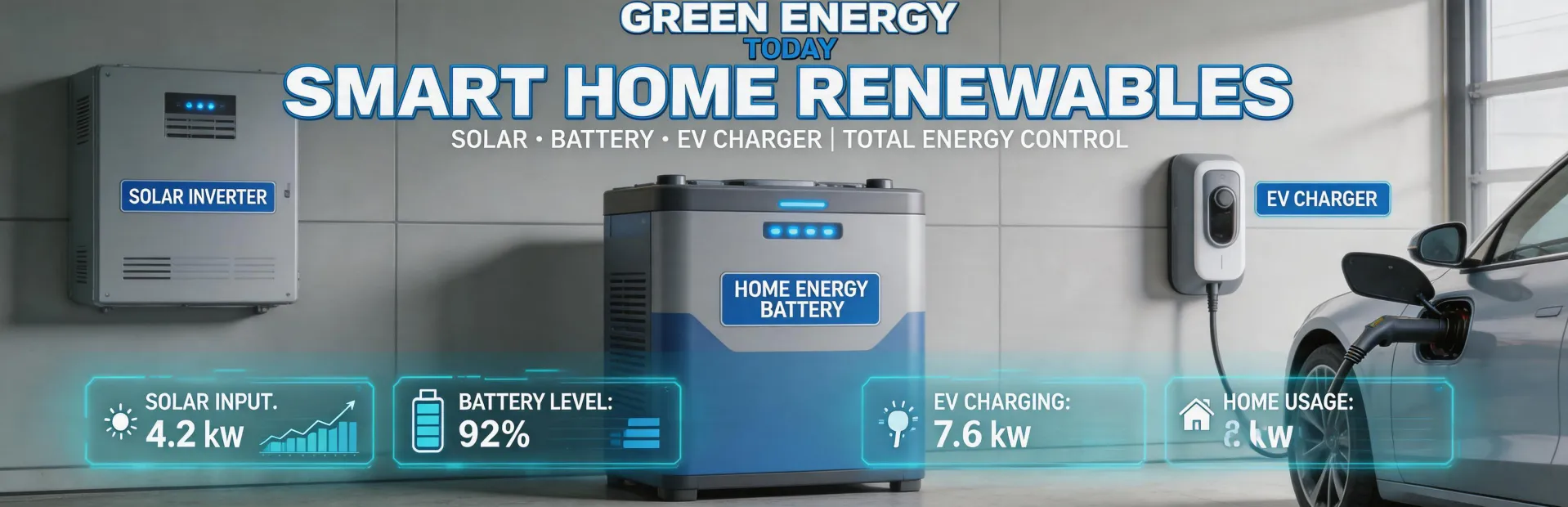
There's No 'One Size Fits All' for Industrial Solar
When I first started managing renewable energy procurements, I fell into a common trap. I thought the main decision was just about power output: we need X megawatts, so let's find the cheapest vendor per watt. It took a couple of painful budget overruns—and one project that nearly stalled because of a misunderstood grid interconnection clause—to realize that sizing a solar and battery plant is less about the wattage and more about the operational reality of your specific project.
The question isn't just 'how big?' but 'what's the job to be done?' A 100kWh system for a remote telecom tower is a completely different animal than a 500kW hybrid plant for a manufacturing facility, which is again different from a 2MW community power project. Let's break down these three common scenarios and what a cost-controller's spreadsheet actually looks like for each.
Scenario A: The 100kWh Solar System (Small Commercial / Critical Load)
Typical Use Case: Backup for a small business, powering a remote telecom site, or offsetting the base load of a small office building.
My initial misjudgment: I assumed a smaller system meant simpler procurement. I was wrong. The cost per kWh is almost always higher for these systems because you're paying a premium for 'small' hardware and a site visit that costs the same as a bigger one.
The TCO Breakdown for a 100kWh System
For a 100kWh system (let's say a 30-40kW solar array with a 100kWh LFP battery), the biggest hidden cost isn't the inverter or the panels—it's the balance of system (BoS) and commissioning. We didn't have a formal line-item checklist when I first scoped this. Cost us when a $5,000 'miscellaneous electrical work' charge appeared on the final invoice.
- Hardware (Inverter, Battery, Racking): ~60% of the budget. This is where you can price shop, but beware of 'introductory' pricing for new battery models that might lack field data.
- Installation & Labor: ~25-30%. This is a fixed cost that doesn't shrink proportionally with system size. A good installer charges for their expertise, not just their hours.
- Permitting & Interconnection: ~5-10%. This can be a wildcard. One municipality required a full structural review for a roof mount that added $1,200.
- Commissioning & Monitoring Setup: ~5%. Critical. We once took delivery of a system that sat idle for two weeks because the commissioning was treated as a 'time-and-materials' afterthought.
Procurement Advice for 100kWh Systems
Focus on the 'Package' price, not the component price. Ask for a single lump-sum quote that includes delivery, installation, and commissioning. We once compared two vendors: Vendor A quoted $42,000 for the system (excluding install), and Vendor B quoted $55,000 'turnkey.' Vendor A's installer added $18,000 in unforeseen costs. The TCO from Vendor B was actually lower.
Scenario B: The 500kW Hybrid Solar Power Plant (Industrial)
Typical Use Case: A manufacturing plant, a large warehouse, or a data center looking to shave peak demand charges and provide backup for critical processes.
The risk I keep asking myself about: The upside was 30-40% reduction in our peak demand charges. The risk was production downtime if the hybrid controller failed. I kept asking myself: is a $180,000 annual savings worth potentially losing a $50,000 production shift?
The TCO Headache: The Hybrid Controller and ESS Container
For a 500kW plant, you're likely looking at a BESS container battery and a hybrid inverter. This is where the cost structure gets complex. The inverter is the brain. The battery is the muscle. And the container is... the container. We didn't have a formal process for evaluating the thermal management of the container. Cost us when the AC unit failed in the first summer.
- The Inverter (e.g., 500kW SolarEdge or central inverter): Spec'ing for DC coupling vs. AC coupling is a decision that has massive TCO implications. DC coupling is more efficient for new builds but locks you into a single inverter manufacturer.
- The BESS Container: Look for 'cycle life at 80% DoD,' not just the kWh rating. A battery rated for 6,000 cycles at 80% depth of discharge is a different asset than one rated for 4,000 cycles.
- Grid Interconnection (1000Vdc vs. 1500Vdc): This is a huge hidden cost. A 1500Vdc system can reduce wiring and labor costs by 10-15%, but requires specialized high-voltage safety training for your maintenance team.
- Check your load profile. Do you have a consistent 24/7 load? A 100kWh system might be about time-of-use shifting. A 2MW plant is about wholesale selling.
- Calculate the $/kWh of your storage, not just your solar. For a 100kWh system, the battery is the expensive bit. For a 2MW plant, the civil works are.
- Ask the utility one simple question: 'How long for a connection study for a [X] MW project?' The answer will tell you 70% of your project timeline.
Procurement Advice for 500kW Plants
Don't buy the container battery as a black box. Ask for a full spec sheet on the thermal system (how does it cool itself?), the BMS communication protocol (is it Modbus? CAN?), and the warranty conditions (is the labor included for a swap?). We once compared two vendors on price alone; the winning bid had a 'container integration' charge of $8,000 that the other vendor had bundled.
Scenario C: The 2 MW Solar Power Plant (Community / Utility-Scale)
Typical Use Case: A community power project, a large-scale corporate PPA, or a utility-owned solar farm.
The lesson learned the hard way: I calculated the worst case: a power purchase agreement (PPA) renegotiation due to a delay in getting the 'large generator interconnection' study from the utility. Best case: we go online on time and sell power at a premium. The expected value said go for it, but the downside felt catastrophic when the utility took 8 months instead of 4 for the study.
The TCO Unlock: Balance of Plant (BoP) & EPC Management
For a 2MW plant, the hardware (modules, inverters) is a small part of the story. The real cost is in the Balance of Plant: the civil works, the trenching, the fencing, the SCADA system, and the grid interconnection. This is where 'professional boundaries' matter. A vendor who says 'we can do everything' is often covering up a lack of deep expertise in the most expensive part of your project.
| Cost Category | Typical % of 2MW TCO | Key Hidden Cost Risk |
|---|---|---|
| Modules & Inverters | 35-40% | Price volatility (pricing accessed January 2025) |
| Battery (if applicable) | 15-25% | Power & Energy capacity ratios (C-rate mismatch) |
| Grid Interconnection | 10-15% | Utility upgrade fees (delays & scope creep) |
| EPC/Civil Work | 30-40% | Subsurface conditions (rock removal costs a ton) |
The vendor who said 'this isn't our strength—here's who does it better' earned my trust for everything else. A good EPC contractor will tell you upfront: 'We handle the electrical works, but we recommend a sub-contractor for the civil engineering.' That honesty saved us from a massive scope gap.
How to Determine Which Scenario Fits Your Project
Here's a framework I use now after tracking 6 years of procurement data:
The bottom line? Don't treat your project like a menu where you just pick a size. Treat it like a custom procurement exercise where the TCO is driven by the interaction between your hardware, your site, and your utility. That's where the real savings are.

Jane Smith
I’m Jane Smith, a senior content writer with over 15 years of experience in the packaging and printing industry. I specialize in writing about the latest trends, technologies, and best practices in packaging design, sustainability, and printing techniques. My goal is to help businesses understand complex printing processes and design solutions that enhance both product packaging and brand visibility.