Look, if you're searching for 'SolarEdge three-phase inverter datasheet,' you're probably past the 'should I use string inverters or optimizers' debate and deep into the specification phase. You want the right model for a specific commercial or large residential job.
But here's the thing: picking a SolarEdge three-phase inverter isn't a one-size-fits-all decision. The right choice depends heavily on your project's size, the battery strategy, and whether you're dealing with complex shading or a clean, south-facing commercial roof. I've worked on about a dozen commercial projects over the past four years using these units, and I've learned that the 'best' datasheet specs don't always translate to the best on-site outcome.
So, let's break this down by three common project scenarios.
Scenario A: The Large Commercial Rooftop (30kW – 100kW+)
For a large, open warehouse or factory roof with consistent pitch and minimal shading, the standard three-phase inverter like the SE30K to SE100K series is often the most cost-effective choice.
I've seen installers get tempted by the idea of using multiple smaller residential inverters because the unit price looks lower. That's a trap. For a 50kW system on a clean roof, the TCO (total cost of ownership) almost always favors a single large three-phase inverter. You save on:
- Labor and mounting: Installing one big inverter vs. three or four smaller ones means less time on the wall and less high-voltage AC wiring.
- Monitoring complexity: One unit to commission, one modem (or Ethernet cable), one set of LED status checks.
- Balance of system: Fewer AC disconnects, less conduit, simpler interconnections.
But—and this is a big one—do not assume the datasheet's max DC power is a safe limit. The SE100K, for example, has a max DC input power of around 135 kW. That's a 1.35 DC/AC ratio. In my experience, a ratio of 1.35 works great in moderate climates but can cause clipping on very sunny, cool spring days. If you're in Arizona or Southern California, I'd target a 1.25 – 1.3 ratio to avoid leaving money on the table. Always run a proper PVsyst simulation.
For this scenario, your datasheet focus should be on the max input voltage (looking for a Vmp range that fits your string sizing) and the number of MPPT trackers. The SE100K has three MPPTs, which is fine for a clean roof, but if you have two different orientations, you'll want a model with at least two independent trackers.
Scenario B: The Complex or Multi-Faceted Installation (Commercial or Large Residential)
This is where SolarEdge's DC-optimized three-phase inverters shine. You have a commercial building with a sawtooth roof, or a large hospital with multiple lower roofs at different orientations, or a site with partial shading from neighboring buildings or HVAC units.
In these cases, you're not just buying an inverter; you're buying the ecosystem. The SolarEdge three-phase inverter + power optimizer combo is your best bet.
Here's why: the inverter itself is a relatively simple DC-to-AC conversion unit. The intelligence is in the optimizers. By using Power Optimizers (P Series or S Series), you can:
- Mix and match different panel orientations and string lengths on a single MPPT.
- Mitigate shading losses on individual panels.
- Get module-level monitoring, which is a huge selling point for commercial clients who want to prove their green energy claims.
The critical datasheet spec for this scenario isn't the inverter's efficiency—it's the optimizer compatibility. The SE30K, for example, has a maximum recommended optimizer count (typically 26 to 34, depending on the optimizer model). Going over this can cause communication issues or overload the inverter's DC input. I've made that mistake. The result: an inverter that kept tripping the 'overvoltage' error based on the LED status (a blinking red light that sent us on a wild goose chase).
Also, you need to check the inverter's communication board compatibility. Some older three-phase inverters need an additional communication module to talk to the optimizers. The newer ones (like the 'Synergy' series) have it built-in. Check the Solaredge inverter LED status guide in the manual to understand what a slow blink vs. a fast blink means for your configuration.
Scenario C: The Integrated Home Energy System (Solar + Home Battery + EV Charger)
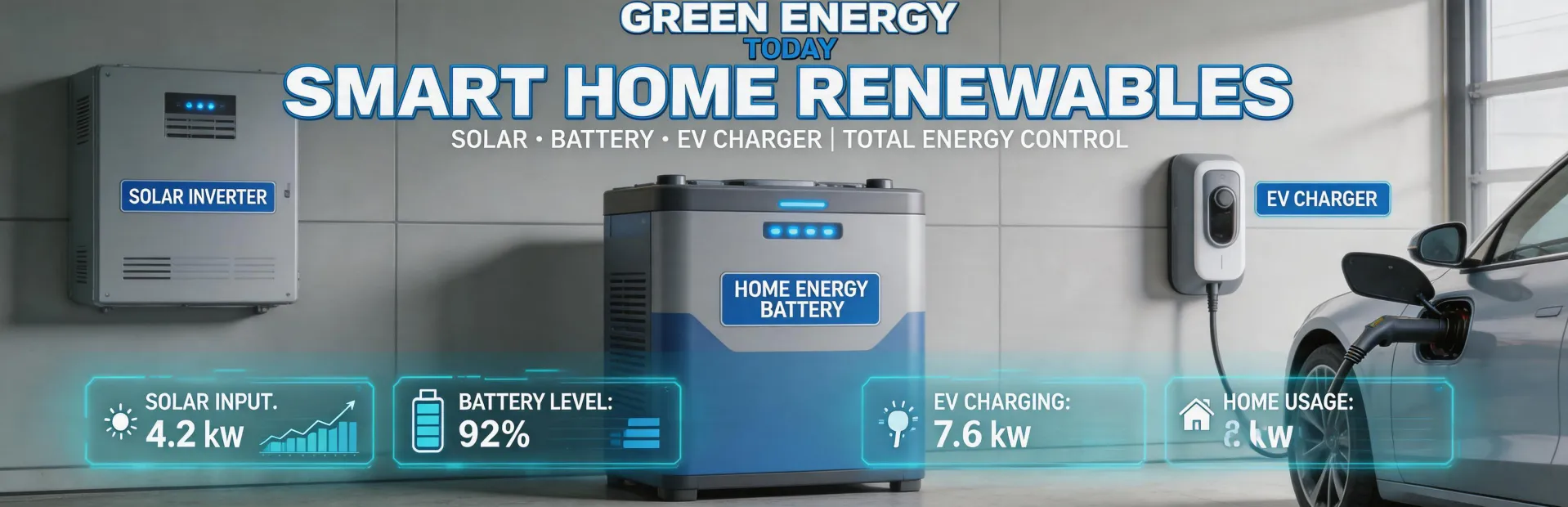
This is a growing trend, and it's where the SolarEdge platform becomes a real differentiator. You have a large residential home or a smaller commercial building that wants solar, a home battery (like the SolarEdge Energy Bank), and one or more EV chargers (like the SolarEdge EV Charger).
The question here is: do you choose a three-phase inverter designed for battery coupling, or do you use a separate inverters and a separate battery inverter?
My recommendation: For a new installation, integrate everything on the DC side using a SolarEdge three-phase inverter with optional battery support.
Why? The efficiency of a DC-coupled system is significantly higher. You avoid the double conversion loss (DC → AC → DC for the battery and AC → DC for the EV charger). The integrated system manages energy flows seamlessly: excess solar from the optimizers charges the battery directly, the inverter sends power to the home, and when the battery is full, power flows to the grid or the EV charger.
But this requires careful planning. Not all three-phase inverters support DC coupling. You need to check the specific model's datasheet for battery compatibility (e.g., 'Storage Ready' models). Also, the battery connection on the DC side uses a specialized wiring harness that must be specified at the time of ordering. Retrofitting this later is expensive and may void the warranty.
For this scenario, your key datasheet parameters are: AC output power (is the inverter big enough to power the house and charge the battery at the same time?), battery DC voltage range, and the energy management interface (does it support the 'SolarEdge Energy Hub'? if not, it's not ready for an integrated setup).
Also, consider the grid import limit. Some utilities restrict the total energy import to a building. If you have a 7.6kW inverter and a 5kW battery, you might need to limit the combined AC output. The SolarEdge system allows you to set this via the monitoring platform, but you need to confirm the inverter's firmware supports it.
How to Decide Which Scenario You're In
It's not always black and white. Here's a quick checklist I use when evaluating a project:
- What's the AC power size? Below 30kW, you're likely in Scenario B or C. Above 30kW, Scenario A is strong, but a complex roof pushes you back to B.
- Is there a battery? If yes, you are firmly in Scenario C. Do not try to hack an AC-coupled battery onto a standard three-phase inverter without understanding the efficiency penalty.
- Is there shading or multiple roof orientations? If yes, Scenario B is your best bet. The optimizer features will pay for themselves in increased yield.
- What about an EV charger? If you are also quoting an EV charger (like a Tata EV charging station for a commercial fleet—yes, I've seen those projects), the integration with the SolarEdge Energy Hub is a strong selling point. You can manage solar, battery, and EV charging from one app.
In my experience, the biggest mistake installers make is treating every commercial project the same. They grab the largest datasheet they can find and spec the highest number. The 'always go bigger' advice ignores the critical nuance of MPPT sizing and cable losses. A 70kW system on a complex roof with a battery will perform far better with two SE30Ks than one SE100K, even if the datasheet suggests the SE100K can handle the total wattage.
A note on compatibility: I've seen three-phase inverters fail due to a lack of compatible optimizers. Always verify the optimizer-to-inverter ratio using the SolarEdge compatibility tool before ordering. An 'LED status' of a solid red light on a three-phase inverter often means a communication fault with an optimizer. Don't blame the inverter; check the plugin count in the monitoring system first.
Finally, a word on pricing (as of January 2025): The hardware cost of a three-phase inverter is only one line item. The real cost is in the BOS (Balance of System) and labor. A project that requires $1,000 more in inverter cost might save $5,000 in installation labor because it's easier to wire. I've learned to calculate TCO (Total Cost of Ownership) before making a selection.
In Q2 2024, when I compared two vendor quotes for a 45kW commercial project, one vendor proposed a central SolarEdge SE50K, and the other proposed two SE27.6Ks. The central unit was $800 cheaper, but it required a custom combiner box that added $1,100 to the BOM. The 'cheap' option ended up costing more. That's a lesson I learned the hard way.

Jane Smith
I’m Jane Smith, a senior content writer with over 15 years of experience in the packaging and printing industry. I specialize in writing about the latest trends, technologies, and best practices in packaging design, sustainability, and printing techniques. My goal is to help businesses understand complex printing processes and design solutions that enhance both product packaging and brand visibility.