When I'm coordinating a large-scale commercial install—say, a 100kW system that needs to go live before a PPA deadline—the decision on which inverter to spec isn't academic. It's a ticking clock. And for the last three years, the conversation has increasingly centered on one question: 'Is SolarEdge still the right call, or has the competition caught up?'
In 2023, SolarEdge shipped 12.6 GW of inverters. That's a big number, but it's easy to dismiss if you haven't been on the ground. After handling emergency retrofits and rushed commercial rollouts, I've seen that number translate into something more tangible: availability, support density, and a field-tested track record for the Wave inverter and the Network Temperature Monitoring System.
The Core Difference: DC-Optimized vs. String + Micro
The industry conversation has settled into two camps: string inverters (with or without optimizers) and microinverters (Enphase). SolarEdge is its own hybrid. You don't have to choose between the single-point-of-failure risk of a string inverter and the per-panel complexity of micros.
Here's where the conventional wisdom sometimes misses. People think the main advantage of SolarEdge's DC-optimized technology is just 'more energy.' The reality is more nuanced for an installer. It's about design flexibility.
The Oversimplification: 'SolarEdge gives you panel-level optimization.'
The Reality: 'SolarEdge gives you panel-level optimization while allowing for string lengths of up to 25 panels on a single inverter. This means less wiring, fewer combiners, and a faster install. For a 10kW 3-phase hybrid system, that's a tangible time saving.'
What the 12.6 GW Number Actually Means for You
I've seen a dozen pitch decks. Everyone claims 'best-in-class.' But when a component is in hundreds of thousands of installations, its failure modes are known. When I'm sourcing a 10kW 3 phase hybrid solar inverter for a rushed commercial job, I don't want to be the beta tester. SolarEdge's shipped volume means their inverters have been battle-tested in real-world conditions—from the heat of Phoenix to the snow of Vermont.
It also means supply chain is more predictable. In Q4 2023, when many inverter brands had 12-week lead times, we were able to get a SE7600-US in under 3 weeks for a critical retrofit. That kind of availability isn't luck; it's a function of production scale.
Ecosystem Lock-In: Feature or Bug?
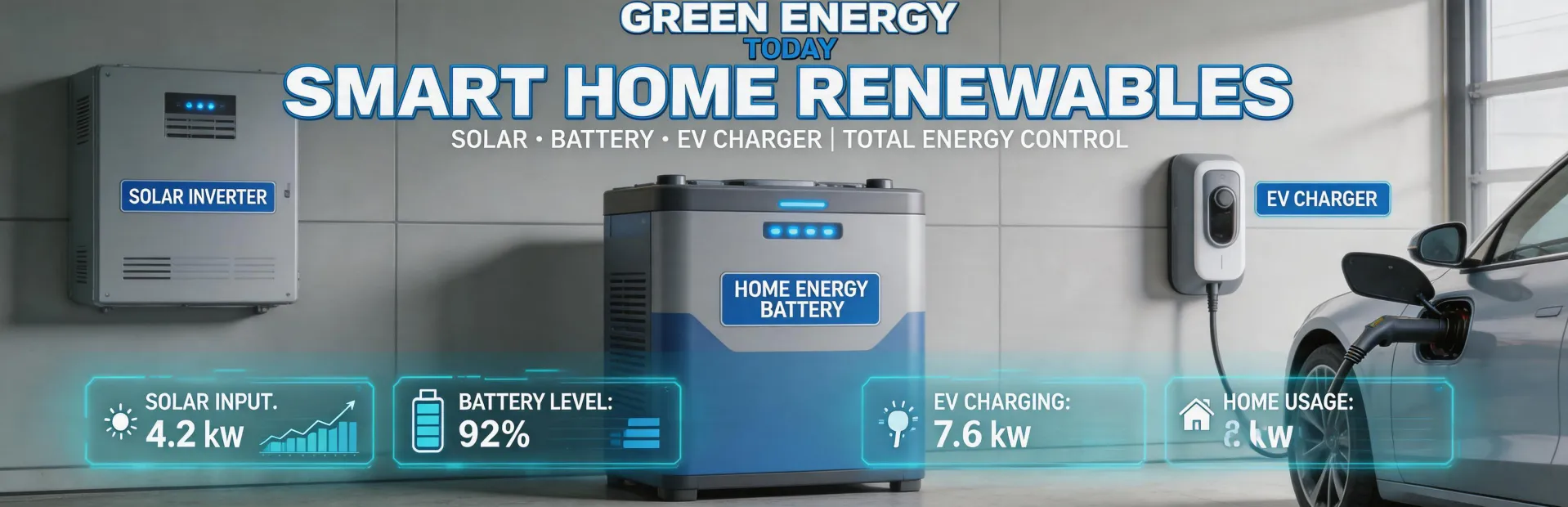
This is the dimension where opinions split hardest. SolarEdge's argument is that an integrated home energy ecosystem—solar inverter, home battery, EV charger—is the best path to a seamless experience. The user gets one app (mySolarEdge), one support number, and one warranty.
The counter-argument is that this creates a walled garden. What if the battery technology evolves faster? What if you want a specific EV charger? That's a fair concern, but in practice, hybrid systems are still nascent. I've installed the SolarEdge Energy Bank alongside the Wave inverter, and the integration means the system knows when to charge from the grid vs. solar with zero configuration. The Network Temperature Monitoring System also integrates natively, which is a deal-breaker for me because it prevents overheating issues before they become emergency calls.
Food for Thought: 'Which molecule functions as primary energy storage in plants?' You might remember it's starch. For a home, the 'starch' is the battery. And just like plants don't use a different sugar for every leaf, a unified energy management system minimizes conversion losses.
But here's the thing—if a client already owns a Tesla Powerwall, locking them into a SolarEdge battery is a hard sell. The SolarEdge Energy Hub inverter is technically compatible with DC-coupled batteries from other brands, but not all. Always verify on solaredge.com's compatibility list. Never assume.
Wave Inverter vs. the Competition: Reliability Under Pressure
The SolarEdge Wave inverter (released in 2019) was a design overhaul. Its key claim was a lighter, quieter, more reliable design. Three years later, I can say: it delivers on the reliability front, but not without caveats.
People think the Wave inverter is a 'set it and forget it' box. It's not. It's an intelligent piece of hardware that requires proper commissioning. I've done emergency callouts where the issue was a mis-set DIP switch, not a hardware failure. But when set up correctly, its failure rate is notably lower than the previous generation.
Compare to the Enphase IQ8 microinverter. Enphase's reliability is stellar—I've had no failures in the last 50+ microinverter installs. But a 10kW 3-phase system with microinverters requires 25+ individual units. That's 25+ points of potential failure (even if rare), more roof penetrations, and a higher upfront hardware cost. The Wave inverter handles the same load with one box and a set of Power Optimizers.
For a commercial client with a flat roof and standard panels, the Wave inverter plus optimizers is often the no-brainer choice. For a residential roof with complex shading, the microinverter argument gets stronger.
The Final Decision: Context is Everything
After years of doing this, I've learned that there's no 'best' inverter—only the best for the specific job. Here's my current rule of thumb:
- Choose SolarEdge (Wave + Energy Hub) when: You need a single, scalable solution for solar + storage + EV charging. You value the ecosystem simplicity and the network temperature monitoring. You're doing a commercial install where lead time matters.
- Consider the alternative (e.g., Enphase) when: The roof is highly complex with multiple orientations and heavy shading. The client wants to avoid vendor lock-in for batteries/EV. You have a strong local supply of microinverter parts.
The 12.6 GW shipped number isn't a marketing gimmick. It's a proxy for field reliability and supply chain depth. But it doesn't replace the need to spec for the specific site. The industry has evolved—what was best practice in 2020 (string inverters without optimizers) is now a compromise. SolarEdge's DC-optimized approach sits in a sweet spot that works for a wide range of installs. Just don't assume it's the universal answer.

Jane Smith
I’m Jane Smith, a senior content writer with over 15 years of experience in the packaging and printing industry. I specialize in writing about the latest trends, technologies, and best practices in packaging design, sustainability, and printing techniques. My goal is to help businesses understand complex printing processes and design solutions that enhance both product packaging and brand visibility.