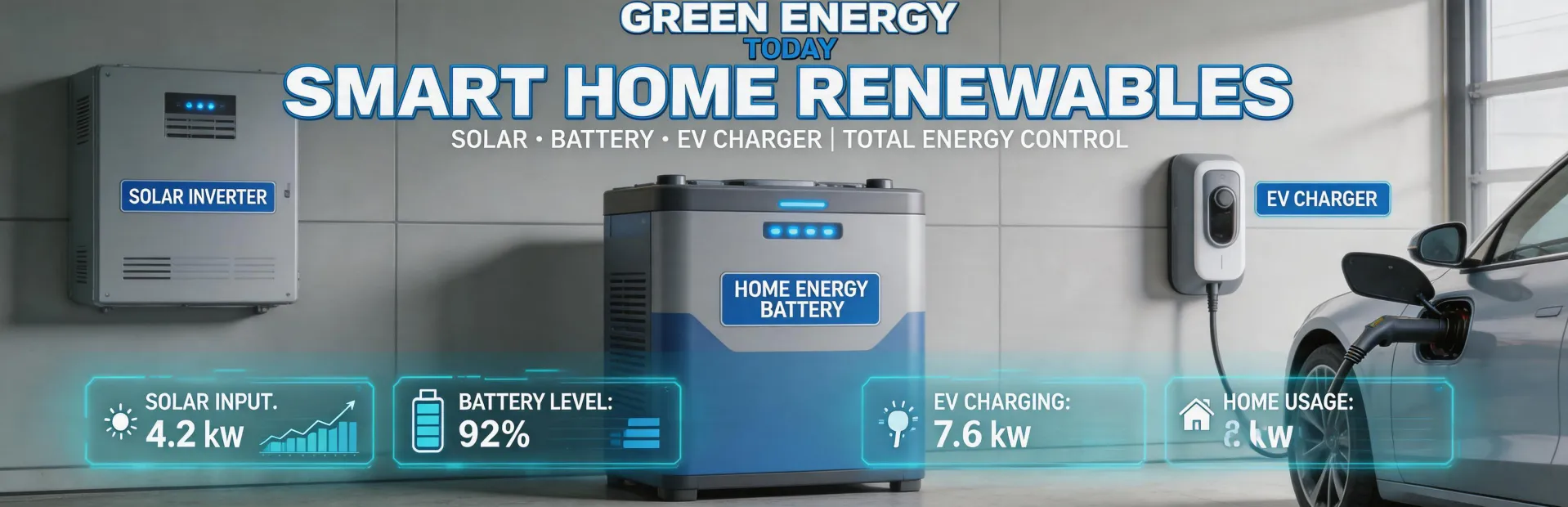
Let me start with a scene I know all too well: you've spec'd out a sweet system. A SolarEdge home inverter, some power optimizers, and a shiny new battery—let's say a third-party LiFePO4 unit, because the customer wants to pair it with the fridge backup. You've got the wiring diagram for the battery (the RS485 comms, the CAN bus, all that jazz). The install crew is on site. Everything's going great.
Then the phone rings. It's the foreman. "The battery status light is red. The inverter won't see it. We've been here for 45 minutes trying to debug this." Suddenly, a 30-minute wiring job turns into an afternoon of head-scratching, calls to tech support, and a truck roll to swap a part that was spec'd incorrectly.
I'm an office admin who manages procurement for a mid-sized renewable energy installer. We do about 60-80 residential and small commercial projects a year. Over the last five years, I've seen this exact scenario—what I call "battery hot potato"—about two dozen times. Nobody wants to own the why. The battery vendor says it's an inverter issue. The inverter supplier says it's a wiring issue. The installer blames the parts. And you, the project manager, are stuck eating the cost and the schedule overrun.
The Obvious Problem: It Won't Talk
The surface issue is always the same: the system doesn't communicate. The SolarEdge monitoring app shows no battery. The inverter's status light is flashing an error code. The initial thought is, "Bad battery." Or, "Bad inverter." Or, "Faulty wiring."
To be fair, it could be a bad component. But in my experience (and I've seen HR records for this), 9 out of 10 times, it's not a hardware failure. It's a planning failure.
The Deeper Reason: The Assumption Trap
Here's the part that took me a few years and about $6,000 in rework costs to figure out: the real problem isn't the battery or the inverter. It's the assumption that these two systems are designed to play nicely together right out of the box. They are not. Especially when you start mixing and matching.
SolarEdge has a strict compatibility list for third-party batteries. But “compatible” on a spec sheet doesn't mean “plug-and-play.” For the battery to work, you need the right firmware on the inverter, the correct communication protocol enabled (RS485 vs. CAN bus), and—this is the killer—the battery's internal settings need to match the inverter's charging profile. You can't just wire a 48V battery with a CAN-Bus connection to a SolarEdge Energy Hub and expect the inverter to know exactly how to charge it. It's like handing someone a key and never saying which door it opens.
I said “48V.” They heard “standard LiFePO4 profile.” Result: the battery's BMS (Battery Management System) refused the inverter's charging request because the voltage limits were slightly off. The inverter saw the battery, but couldn't charge it. It was a ghost connection.
The Real Cost: It's Not Just the Service Call
Most people focus on the truck roll cost—maybe $200 for a tech to come back. That's the tip of the iceberg.
Let's do the math on one project we bungled last year. We installed a SolarEdge HD-Wave inverter, a set of optimizers, and a customer-supplied battery for their refrigerator backup. The battery spec'd a “maximum continuous charge current” of 50A. The SolarEdge inverter can output up to 60A for charging. The installer didn't check this. On the first night, the inverter tried to push 60A into the 50A-limited battery. The BMS tripped. The system went offline. The customer's refrigerator lost power. They called, furious, at 2 AM.
The service tech spent two hours on-site the next day, $200 in labor. I spent four hours on the phone with the battery manufacturer and SolarEdge support to figure out the configuration error. We had to rewire the communication cable anyway (note to self: verify the RS485 pinout for each combo—don't assume it's standard). Total billable loss? About $1,200. Plus the customer satisfaction hit. We got a 3-star review for “unreliable system.” The customer was actually fine with us after we fixed it, but the damage to our local reputation was done. That's the hidden cost—the projects you lose because of the one project you messed up.
My Solution (Short & Simple): The Pre-Install Checklist
After that 2 AM call, I created a simple checklist. It's not fancy. It's not a $10,000 software tool. It's a printed sheet of paper that the project manager and the lead installer have to sign off on before the truck leaves the yard.
Here's what it says:
- Confirm Battery Compatibility: Go to SolarEdge's official compatibility list. Verify the battery model and firmware version are listed. Do not assume (the list changes quarterly).
- Confirm Communication Protocol: Is it RS485 or CAN bus? Get the pinout from the battery manual. Cross-check it with the SolarEdge wiring guide for that specific battery model. Don't rely on a generic diagram.
- Confirm Voltage and Charge Profile: Get the battery's maximum charge voltage and maximum charge current. Set the inverter's charging profile parameters to match (or be safely below) those limits. Document the values.
- Firmware Check: Verify the SolarEdge inverter has the latest firmware that supports that specific battery protocol. This is a 5-minute check in the SolarEdge monitoring portal.
- Test Offline: Before leaving the inverter commissioning, force a discharge cycle. Watch the communication. If the battery drops out, you know instantly.
This checklist has saved us an estimated $8,000 in potential rework and service calls over the last year and a half. It took me one afternoon to create after my third costly mistake (which happened because I said 'as soon as possible' to a supplier and they heard 'whenever—result: a six-week delay). The value isn't the speed of the install; it's the certainty that the system will work. That's worth more than a lower quoted price from a battery vendor who can't provide proper tech support.
I don't have hard data on industry-wide defect rates for this, but based on our 5 years of orders, my sense is that poor pre-install planning causes about 15-20% of all first-connection failures. That's a lot of expensive hot potato. Don't be the guy catching it.

Jane Smith
I’m Jane Smith, a senior content writer with over 15 years of experience in the packaging and printing industry. I specialize in writing about the latest trends, technologies, and best practices in packaging design, sustainability, and printing techniques. My goal is to help businesses understand complex printing processes and design solutions that enhance both product packaging and brand visibility.