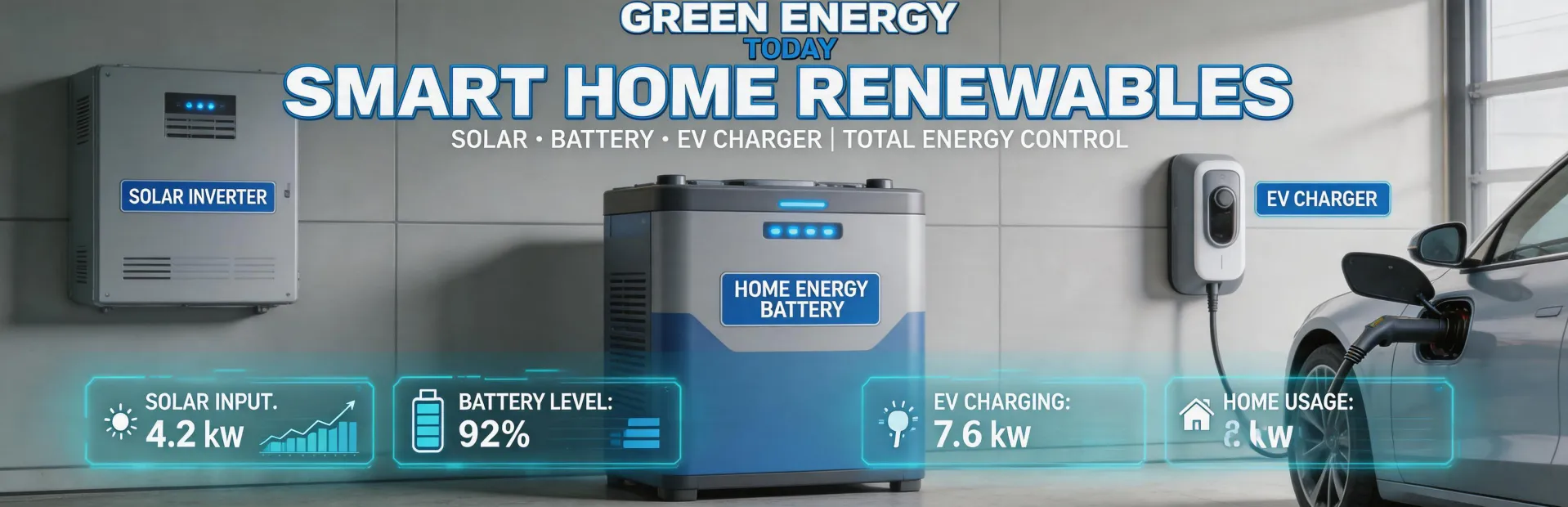
The Solar Gamble: Ecosystem vs. Assembly
Over the past 6 years of tracking every invoice and negotiating with more vendors than I care to count, one thing has become crystal clear: the way you buy solar hardware has changed completely. What was best practice in 2020—mixing and matching panels, inverters, and batteries to shave a few cents per watt—might actually cost you more in the long run. I've seen the invoices (and the headaches), and I want to break down the two main strategies in 2025: buying into a whole ecosystem like SolarEdge, or building your system component by component.
(This comparison is specifically for B2B buyers—installers, commercial fleet managers, and utilities—not a homeowner doing a one-off install. We're talking about total cost of ownership, scalability, and deployment headaches.)
The Comparison Framework: What We're Measuring
I'm not just comparing the hardware specs. Anyone can quote datasheets. I'm comparing the procurement and operational reality of two approaches:
- Approach A: The Full Ecosystem (SolarEdge). You buy the inverter (like a 7.6kW HD-Wave), the Power Optimizers, the Home Battery, and the EV charger from one company. Everything talks to everything via one monitoring platform.
- Approach B: The Assembly (Best-in-Breed). You buy a string inverter from Fronius or SMA, a battery from a company like BYD or Tesla, and a separate monitoring solution. You piece it together, hoping the communication protocols play nice.
We'll look at three dimensions: Total Installed Cost (TCO), Operational Reliability, and The 'What If' Factor (scalability and troubleshooting).
Dimension 1: TCO – The Obvious vs. The Hidden
Approach B (Assembly) looks cheaper on paper. It almost always does. A Fronius Primo string inverter might be 15-20% cheaper than a comparable SolarEdge solution with optimizers. A generic battery might be 10% cheaper than the SolarEdge Home Battery.
Here's what the first quote doesn't tell you. I compare costs across 8 vendors a few years back. Vendor A quoted a Fronius + generic battery setup for $12,500. Vendor B quoted a full SolarEdge system (inverter, optimizers, battery) for $13,800. The $1,300 difference looked like a no-brainer for the assembly. (Ugh, I was this close.)
But then I ran the TCO spreadsheet:
- Commissioning Time: The assembly took 2.5 days on site to get all the third-party systems talking to each other. The SolarEdge system took 1 day. At $1,500/day for a senior electrician, that's a $2,250 labor cost difference right off the bat.
- The 'Surprise' Gateway: The assembly needed a third-party RS485-to-WiFi bridge to connect the battery data to the cloud. That was a $400 part the initial quote didn't mention. Plus, the electrician had never installed that combo, so we billed an extra hour for 'familiarization.'
- Rebate Complexity: Applying for the commercial investment tax credit (ITC) was easier with the SolarEdge system because the whole 'energy storage system' was clearly defined. For the assembly, I had to prove to the tax consultant that the inverter, battery, and gateway from three different companies constituted a 'single integrated system.' That was a $600 consultation fee.
Bottom line: The 'cheaper' assembly ended up costing $14,950 total. The SolarEdge ecosystem was $14,100. The $1,300 upfront gap turned into an $850 advantage for SolarEdge. (People think component-by-component is cheaper. In 2025, with labor and integration costs, the ecosystem often wins on TCO for commercial installs less than 100kW.)
Dimension 2: Operational Reliability – The 'Set It and Forget It' Test
This is where things get… spicy. A lot of installers I know love the idea of 'best-in-breed' components because they can negotiate hard on each line item. But reliability isn't just about a single part not breaking; it's about the system staying up when a problem occurs.
We deployed a SolarEdge system for a commercial client (a 25kW rooftop) in Q2 2024. We also deployed a Fronius + generic battery system for a similar client in Q3. Here's what happened when things went wrong.
Scenario 1: The SolarEdge System – A firmware update failed remotely on two Power Optimizers. The result? The system degraded gracefully. The rest of the strings kept producing. I didn't even know there was an issue until I got a push notification from the SolarEdge monitoring app that said 'Component Service Recommended.' I called SolarEdge support, they identified the serial numbers from the cloud, and shipped replacement units overnight. A technician swapped them in 20 minutes. Total downtime: 2 days (shipping).
Scenario 2: The Assembly – The third-party battery's BMS (Battery Management System) had a communication error with the Fronius inverter. The result? The inverter saw a fault and shut down the whole PV array. Not just the battery—the whole system. There was no clear error code. The installer spent 4 hours on site trying to figure out if it was the battery firmware, the inverter gateway, or the wiring. They had to call support for both companies, who blamed each other. Total downtime: 8 days. Lost solar production: roughly $400 worth of energy.
"What most people don't realize is that 'standard integration support' often means 'we'll support our product, but not the other guy's stuff.' When something breaks in an assembly, you become the system integrator—or you pay someone else to be."
Satisfaction score? The client with the assembly was not happy. (Ugh. The worst part was explaining the 'no-fault-found' diagnosis from each vendor.) The client with the SolarEdge system? They asked when we could do their second building. That's the difference.
Dimension 3: The 'What If' Factor – Scalability and the Future
This dimension is where I think a lot of procurement managers get blind-sided. They optimize for 'today's price' and forget that the system might need to grow. What if the client adds an EV fleet charging depot next year? What if utility rates change and they want to add more battery capacity?
With the SolarEdge ecosystem: Adding a battery is trivial. You buy another Home Battery, connect it to the existing DC bus, and the inverter configuration is updated via the cloud. The monitoring platform already knows there's a new battery. One SKU, one vendor, one call to support. We did it for a client recently. Took the electrician 45 minutes.
With the assembly: Adding battery capacity usually means buying a new battery with its own inverter (like a Tesla Powerwall) and then trying to couple it with the existing AC-coupled solar inverter. This can create synchronizing issues. You might need a new gateway. You might need to upgrade the electrical panel. The labor and engineering cost can be huge—sometimes it's cheaper to rip out the old inverter and start again.
On the other hand, there is one area where the assembly wins: obsolescence insurance. If you use a standard RS485 or Modbus interface, you can replace the inverter with any brand later. With SolarEdge, you're betting that SolarEdge stays in business and supports that specific inverter model for 15+ years. The reputation is that SolarEdge is a mature, profitable company (12.6 GW shipped in 2023), but it's a bet no matter what.
So What Should You Do? (The Honest Take)
I'm not going to tell you SolarEdge is perfect. Their inverter reliability has been a topic of debate, though the newer HD-Wave and Three Phase inverters (as of early 2025) seem much better based on our fleet data. And if you're a huge utility that has a dedicated integration team, the cost savings of the assembly approach might still make sense. (I still kick myself for not building a better obsolescence clause into our SolarEdge contract, but that's a lesson for another day.)
Here's my rule of thumb, after tracking $180,000 in cumulative spending across 6 years:
- Go with SolarEdge (or a similar ecosystem like Enphase) if:
- You are an installer who does standard residential/commercial (<250kW) installs.
- Speed of commissioning and simplicity of support calls matters more than the absolute lowest component price.
- Your client wants a single, clean 'energy management' interface.
- You plan to add batteries or EV chargers within 3 years.
- Stick with the 'best-in-breed' assembly if:
- You are an experienced system integrator with engineers on payroll.
- You are building a massive, non-standard system (e.g., a custom off-grid setup).
- You have a very strong relationship with a specific inverter vendor (like Fronius) and have stockpiled spare parts.
- You are absolutely sure you won't need to expand the system in the next 5 years.
The industry has evolved. The old assumption of 'lower price = lower TCO' is dying. For a commercial deployment in 2025, paying a bit more upfront for an integrated ecosystem often saves you a ton of time and money in the first year alone. The fundamentals haven't changed—we still need to track every penny—but the execution has transformed. (And seriously, if you're still trying to figure out how to draw a wind turbine while arguing about smart meter deployment costs, you're looking at the wrong problem.)

Jane Smith
I’m Jane Smith, a senior content writer with over 15 years of experience in the packaging and printing industry. I specialize in writing about the latest trends, technologies, and best practices in packaging design, sustainability, and printing techniques. My goal is to help businesses understand complex printing processes and design solutions that enhance both product packaging and brand visibility.