If you've ever opened the SolarEdge monitoring app and seen a flatline where your production graph should be, you know that sinking feeling. My name is Mark, and I'm the office administrator for a mid-size engineering firm—about 120 people across two locations. Since 2021, I've been managing our building operations, which includes overseeing the 48.6 kW rooftop solar array the company invested in as part of a sustainability push. When our 'solaredge pv monitoring' dashboard went dark last February, my first thought was hardware failure. But here's the thing—it wasn't.
The Surface Problem: A Dead System on the Screen
You see a system with zero power output. The inverter isn't reporting. The optimizer status is grey. Your immediate conclusion is that something is broken—a failed inverter, a faulty string, maybe a grid issue. And maybe it is. But before you start swapping hardware, let me walk you through what I found when I dug deeper. Basically, the surface problem—a 'dead' monitoring system—was real. The panels weren't producing (or so the graph said). But the root cause wasn't what I expected.
The Deeper Reasons: Beyond the Hardware
After 48 hours of panic and a call to our installer (who was booked out for two weeks), I started pulling logs. What I found surprised me: the inverter itself was online and producing. The issue was a network gap between the inverter and the monitoring portal.
SolarEdge inverters typically connect to the internet via an Ethernet cable or a ZigBee wireless kit. What I hadn't realized—and what our installer hadn't explicitly documented—was that the ZigBee signal had to travel through a concrete wall and around an elevator shaft. The installer had set it up during construction, but after we finished the buildout, the signal path changed. The monitoring platform reported zero because it hadn't received data packets in over 72 hours.
Put another way: the system was making power—just not telling anyone about it. And because we rely on monitoring for performance verification and SREC reporting, we effectively had a blind spot.
Another thing I learned: sometimes the issue is a commissioning flag. SolarEdge systems require a formal 'commissioning' step where the installer activates the inverter's connection to the monitoring portal. If that step isn't completed—or if it's done but a software update afterwards resets the communication settings—the system will appear offline. I've heard from a facilities manager at another company who dealt with exactly this: their array ran for three months without reporting before someone noticed the dashboard was static.
The Cost of Ignoring the Deeper Problem
Had I just assumed the inverter was dead and ordered a replacement (which, for a commercial SolarEdge SEXXK-XXXX inverter, is not cheap—north of $3,000 before labor), I'd have been out the cost of a part I didn't need, plus lost production time during the swap.
More importantly, we lost about three weeks of accurate production data. That meant our SREC aggregator couldn't verify generation for that period. We're still sorting out how that affects our quarterly reporting. The vendor who couldn't provide proper monitoring support cost us, in paperwork time and follow-up calls, about 12 hours of my time. And that's 12 hours I wasn't spending on other tasks—like managing our vendors for office supplies, which is the bulk of my budget.
And another thing: if the monitoring issue had gone unaddressed during a maintenance check, we could have had a ground fault or a string issue go unnoticed. A small fault in one optimizer can bring down an entire string, and without real-time data, you don't know until the next quarter's utility bill shows up with a surprise.
The Path Forward: Not Just More Hardware
So what did I do? I didn't replace the inverter. Instead, I:
- Checked the communication status at the inverter's local display (there's a menu for 'Communication' and 'Status').
- Verified the ZigBee signal strength—it was at 20%, which is low. The installer moved the receiver closer to a window. Now it's at 85%.
- Ensured the commission flag was set via the monitoring portal. Our installer had to log into the platform and re-commission the inverter after the latest firmware update.
The problem never was the inverter. It was the infrastructure around the inverter: the network path, the installer's documentation gap, and our own assumption that 'no data = no power.'
SolarEdge shipped 12.6 GW of inverters in 2023 (industry sources; see their annual Form 20-F). That's a lot of hardware. And most of it works. But the monitoring chain has several touch points—inverter, communication device, network, portal—where things can quietly fail without affecting actual generation. For a commercial site like ours, where solar is a line item in the operations budget, that kind of silent failure is expensive for the admin who has to chase it.
Now, if you're an admin or a facilities person and you're reading this, your mileage may vary. Our setup was a specific context: a commercial array in a new building retrofit, with ZigBee communication. If you have an Ethernet-connected system, your failure modes are different (maybe a cable got yanked during a cleaning crew visit). I can only speak to my context. But I'd strongly recommend verifying the communication layer before ordering a service call for hardware replacement.
Even after we fixed the link, I kept second-guessing—what if the wireless signal drops again during the summer when the roof heats up? The two weeks until the installer came to physically check the receiver were stressful (ugh). But it's been stable since March.
A Quick Word on Broader Energy Flexibility
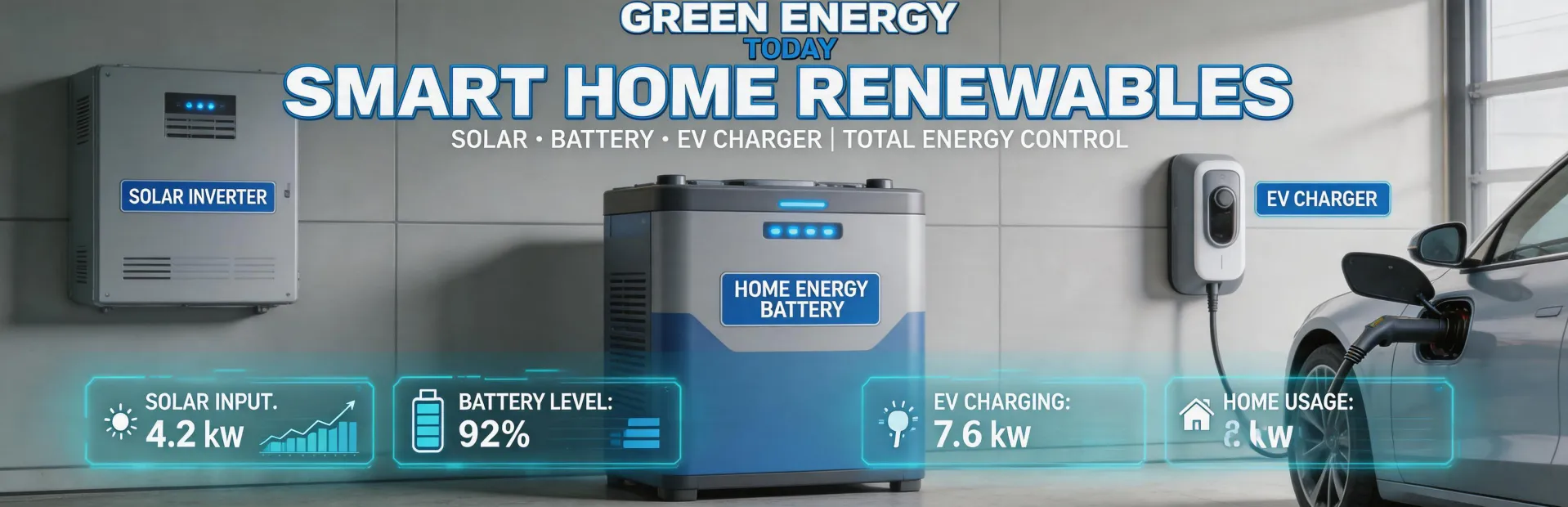
This whole experience has made me more interested in how we can use solar generation strategically. We're now looking at a good solar battery to shift our load, because our array overshoots our daytime usage in summer but we still pay peak rates in the evening. A vendor we're speaking with mentioned the "erth well ess" system as a potential fit—though I haven't verified compatibility with our SolarEdge setup yet. We also have a few employees asking about charging their EVs at work. The question, how to get EV charger at work for employees, is becoming a real request for the admin team to evaluate. But that's a whole other project (I think I'm mentally bookmarking that).
But I've also learned from this: a vendor who said "this isn't our strength" when I asked about battery integration actually earned my trust for everything else. They pointed me to a specialist. That's the kind of honesty I value now.
An industry observer I respect put it this way: "The firms that know their boundaries are the ones you can trust to know their craft." I'd rather work with a solar specialist who knows their limits on storage than a generalist who overpromises on full home energy ecosystems.
So, bottom line: if your SolarEdge monitoring goes dark, don't panic and don't replace the inverter. Check the chain. It might be a 15-minute fix. And if you're also considering how to integrate batteries or workplace EV charging, find good partners who are honest about what they can and can't do.

Jane Smith
I’m Jane Smith, a senior content writer with over 15 years of experience in the packaging and printing industry. I specialize in writing about the latest trends, technologies, and best practices in packaging design, sustainability, and printing techniques. My goal is to help businesses understand complex printing processes and design solutions that enhance both product packaging and brand visibility.