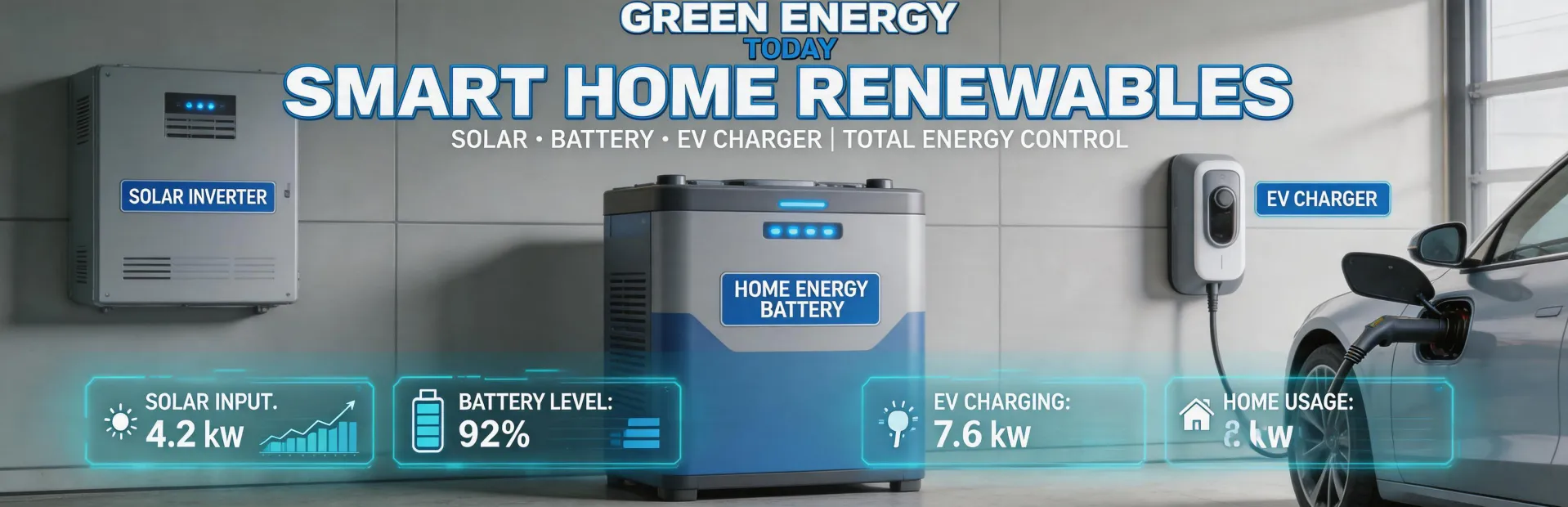
Last spring, I watched a rookie installer spend three hours on a 50 amp RV solar system. He wired everything by the book. The inverter hummed. The panels charged. The client was thrilled. Two weeks later, the battery bank was dead.
He’d skimped on the lifepo4 battery charger circuit specifications. The charger he picked was ‘close enough’ to the BMS requirements. Close enough cost him a weekend of troubleshooting, a $200 replacement board, and a client who now questions every recommendation he makes.
I see this pattern constantly in my role as a quality compliance manager in the renewable energy sector. I review every installation report before it reaches our partners — roughly 200+ unique systems annually. In Q1 2024 alone, I rejected 12% of first deliveries due to component specification mismatches. The cheapest quote, the ‘will-work’ part, the assumed compatibility — they’re the silent margin killers.
The Surface Problem: Mismatched Components
The surface problem is easy to identify. A solaredge ct installation doesn’t align with the main panel. The CT ratios are off by a factor of two. The production readings are garbage. The client is upset because their monitoring shows 50% less energy than their meter reads.
From the outside, it looks like a wiring error. A sloppy installer. The reality is almost always a procurement decision made three weeks earlier. Someone bought a ‘compatible’ CT from a third-party supplier to save $40. They didn’t verify the turns ratio or the phase rotation. That $40 saving has now cost 4 hours of labor, a service call, and a re-imaging of the monitoring dashboard. Period.
People assume the lowest quote means the vendor is more efficient. What they don’t see is which costs are being hidden or deferred. The hidden cost of a ‘close enough’ component is never visible on the initial purchase order. It shows up on the P&L as rework, warranty claims, and lost referrals.
The Deeper Reason: Misunderstanding Component Ecosystems
It's tempting to think you can just compare unit prices. ‘This solaredge solar inverter costs X, that one costs Y, they both output 7.6 kW.’ But identical specs from different tiers of the same product line can result in wildly different outcomes when paired with power optimizers or batteries.
What I mean is that an inverter isn’t just an inverter. It’s a gateway to an ecosystem. The SolarEdge HD-Wave inverter uses a different topology than the legacy models. If you pair it with an older optimizer, the efficiency curve shifts. If you pair it with a third-party battery without the correct lifepo4 battery charger circuit profile, the cycle life can degrade by 30% in the first year. The vendor doesn’t tell you that when you’re comparing prices. You find out when the customer calls, six months in, wondering why their battery is already down to 80% capacity.
The ‘always get three quotes’ advice ignores the transaction cost of vendor evaluation and the value of established relationships. I learned this the hard way. In 2022, I approved a batch of 50 units from a new supplier who was 15% cheaper on paper. The units arrived, and the CT wiring color code was reversed. Not a spec violation — my spec didn’t specify color code. But every single one of my 15 installers had to re-check and re-label each unit. The time cost? Over $2,000 in wasted labor. On our 50,000-unit annual order program, that $40 per unit savings became a $40 per unit loss. Looking back, I should have paid the premium for the known supplier. At the time, the cost savings seemed like a no-brainer.
The Real Cost: Lost Time, Lost Trust, Lost Clients
Let’s quantify the damage. A typical residential 50 amp rv solar system install takes an experienced team 4-6 hours. If you spec a mismatched charger circuit — say, one that defaults to bulk charge at 14.6V instead of the recommended 14.2V for LFP — you’re not going to see the failure immediately. The battery will look fine for three months. Then it starts swelling. By month five, the BMS shuts it down permanently.
The cost breakdown is brutal:
- Replacement battery: $800 – $1,200
- 3 hours of labor for diagnosis and swap: $300
- Customer compensation or discount: $200
- Lost future referrals (estimated 2-3 jobs per year): $3,000 – $6,000
That ‘cheap’ charger circuit cost you over $1,000 in direct costs and potentially $5,000 in lost pipeline. And it’s a story you can’t tell the client without sounding defensive.
The issue here isn’t just the cost of the parts. The issue is that the installer focused on the price of the component (the charger) instead of the total cost of ownership of the system (the battery + charger + inverter + monitoring). Hidden costs add up fast (like downtime, angry calls, re-drilling mounting holes).
If I could redo that 2022 decision, I’d invest more upfront in component-level specifications. But given what I knew then — essentially, price lists and datasheets — my decision was reasonable. A mistake, but a reasonable one. Now, every new vendor contract in my portfolio includes a specific clause: ‘All components supplied must be listed on the SolarEdge compatibility matrix at the time of order.’ It’s saved us from at least three major failures this year alone.
The Solution: Spec Accuracy is a Business Decision, Not a Technical One
The solution isn’t more training. It’s not better installers. It's a procurement mindset shift. You stop buying components. You start buying compatibility.
For every system — whether it’s a 50 amp RV job or a 100 kW commercial site — the first step isn’t pricing. It’s a compatibility check. Use tools like the SolarEdge Designer to verify that the inverter, optimizer, battery, and CT all align. This takes 15 minutes. It costs nothing. Skipping it costs thousands.
When I review proposals now, I look at three specific things:
- Is the solaredge ct installation model specified in the quote (ratio, phase, cable length)? If it’s just ‘CT included,’ I flag it.
- Does the battery charger circuit list a charge profile (voltage and current limits) that matches the battery manufacturer’s spec? If not, I ask for the datasheet.
- What is the total system cost including potential rework? If the component price is 20% below market average, I assume a 50% chance of rework cost and adjust the quote accordingly.
I once rejected a quote that was 12% cheaper than the competition. The vendor was furious. I told them why: they hadn’t specified the CT model. Three months later, they called back. They’d had two returns on a different project because the CT they shipped wasn’t compatible. They thanked me. Specs matter. A lot.
If you’re an installer or a system integrator, the takeaway is simple: don’t let $40 savings create $4,000 problems. The next time the client asks how much will level 2 charger cost per mile and how it integrates with their solar setup, the answer isn’t just a price per mile. It’s a conversation about system architecture. The charger, the inverter, the CT, the battery — they all have to talk to each other. If they don’t, you’re not selling a solution. You’re selling a future service call.

Jane Smith
I’m Jane Smith, a senior content writer with over 15 years of experience in the packaging and printing industry. I specialize in writing about the latest trends, technologies, and best practices in packaging design, sustainability, and printing techniques. My goal is to help businesses understand complex printing processes and design solutions that enhance both product packaging and brand visibility.