-
The Problem: There’s No “Best” Solar Equipment—Only the Best Fit for Your Situation
-
Scenario A: You’re a New Installation Company Focused on Simple Rooftop Jobs
-
Scenario B: You’re a Seasoned Commercial Integrator Who Cares About Reliability and Monitoring
-
Scenario C: You’re a Large Enterprise Evaluating Total Cost of Ownership for a Multi-Site Portfolio
-
How to Know Which Scenario You’re In
The Problem: There’s No “Best” Solar Equipment—Only the Best Fit for Your Situation
When I took over purchasing for our company back in 2020, I assumed picking the right solar inverter was like picking a printer. You find the one with the best specs, you negotiate the price, you buy it. Simple.
After about 40 orders across different types of renewable projects, I've realized it's not that simple. What works for a residential installer is a nightmare for a commercial system integrator. What saves your ops team time might kill your maintenance budget.
So, let’s talk about this in a way that actually helps you make a decision. Instead of pretending there’s one right answer, I’ll break down the different scenarios I see all the time—and which solution fits which situation.
Before we dive into the scenarios, here’s a quick reality check. SolarEdge shipped 12.6 GW of inverters in 2023. That’s a lot. But market share alone doesn’t tell you if it’s the right choice for your project. Let’s figure that out.
Scenario A: You’re a New Installation Company Focused on Simple Rooftop Jobs
Situation: Your team is small—maybe five guys. You mostly do residential rooftops and small commercial. Every job needs to be fast, and mistakes are expensive.
In my first year, I made the classic specification error: I assumed 'standard' meant the same thing to every vendor. Turned out one vendor's 'standard residential setup' required an extra day of labor for wiring. Cost me a renegotiation with the client—and a lot of internal frustration.
Your approach: Look for a solution that minimizes on-site labor. SolarEdge’s power optimizers and module-level monitoring let you commission a system faster because you don’t need to wire strings in a specific configuration. The installer I work with now says it saves them about 30% on labor per job compared to a traditional string inverter setup.
One thing to know: the inverters themselves require a reset sometimes. If you get a communication error, the process is standard—you toggle the main switch off, wait 5 minutes, and power it back on. I’ve had to do this exactly once on a 24-panel system. Not a deal-breaker, but worth knowing.
Scenario B: You’re a Seasoned Commercial Integrator Who Cares About Reliability and Monitoring
Situation: Your clients are businesses. They have facilities managers who want to see real-time performance data. Downtime means lost production, and you get blamed.
Everyone told me to check the monitoring platform before approving a manufacturer. I only believed it after skipping that step once.
Your approach: The monitoring platform is non-negotiable. SolarEdge’s monitoring portal gives you per-panel data. For a 100 kW commercial roof, this is gold. If one panel fails, you know immediately. I’ve seen scenarios where a competitor’s string inverter setup meant the entire string (20 panels) dropped to 50% output and the client didn’t notice for three days. That’s thousands in lost energy—and a very angry client.
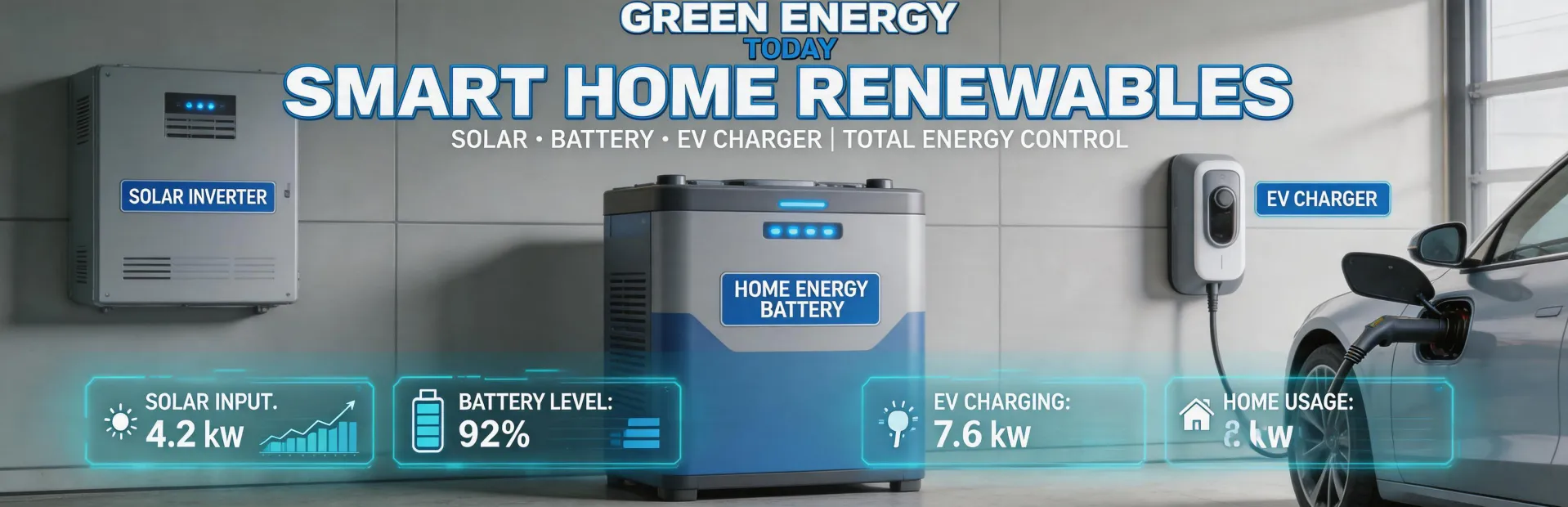
Also, think about the battery. If your client wants backup power or time-of-use arbitrage, SolarEdge’s home battery integrates natively with the inverter. No separate communication gateway needed. Cuts 2–3 hours of commissioning time.
Scenario C: You’re a Large Enterprise Evaluating Total Cost of Ownership for a Multi-Site Portfolio
Situation: You manage 20+ facilities in different regions. You need a solution that works uniformly, can be monitored centrally, and has predictable maintenance costs.
Calculated the worst case: a 15-year contract with one vendor whose proprietary system locked us in. The upside was a small discount on hardware. The risk was $40,000 incremental cost if we needed to switch vendors down the line. The expected value said no—so we standardized on an open-systems approach where possible.
Your approach: This is where TCO matters most. The lowest quote for inverters might be $500 less per unit, but if it means you need a different battery, a separate gateway, and specialized installer training, you’ve just added $2,000 per site in hidden costs.
SolarEdge’s ecosystem approach—inverter, battery, EV charger, and monitoring all in one stack—reduces vendor management overhead. In our 2024 vendor consolidation project, we cut our administrative time from 8 vendors to 3, saving the accounting team about 6 hours monthly. That’s real money.
Also, consider the module-level failure rates. In a portfolio-wide analysis, the optimizers mean a single panel failure doesn’t drag down the whole string. We saw a 3% difference in annual energy yield in one site with shading issues. That’s small, but on a 500 kW system, it’s thousands of dollars annually.
How to Know Which Scenario You’re In
Here’s a quick checklist I use before I even talk to a vendor:
- Number of sites: 1–5 → Scenario A or B. 6+ → Scenario C.
- Technical team: Do you have in-house electricians? Yes → you can manage complexity. No → keep it simple (Scenario A).
- Performance guarantee required: If your contract has a production guarantee clause → meticulous monitoring (Scenario B or C).
- Current vendor count: More than 6 vendors → you’re losing money in admin overhead. Consolidate.
The 'cheapest' option isn't just about the sticker price—it's about the total cost including your time spent managing issues, the risk of delays, and the potential need for redos.
In 2023, SolarEdge shipped 12.6 GW. The stationary energy storage market size was about $12 billion globally. If you’re in this industry, the decisions you make today affect your maintenance budget for the next 10–15 years. Don’t choose based on the unit price. Choose based on the total cost.
And for those wind turbine questions? I’ll save that for another day. Different ecosystem entirely.

Jane Smith
I’m Jane Smith, a senior content writer with over 15 years of experience in the packaging and printing industry. I specialize in writing about the latest trends, technologies, and best practices in packaging design, sustainability, and printing techniques. My goal is to help businesses understand complex printing processes and design solutions that enhance both product packaging and brand visibility.