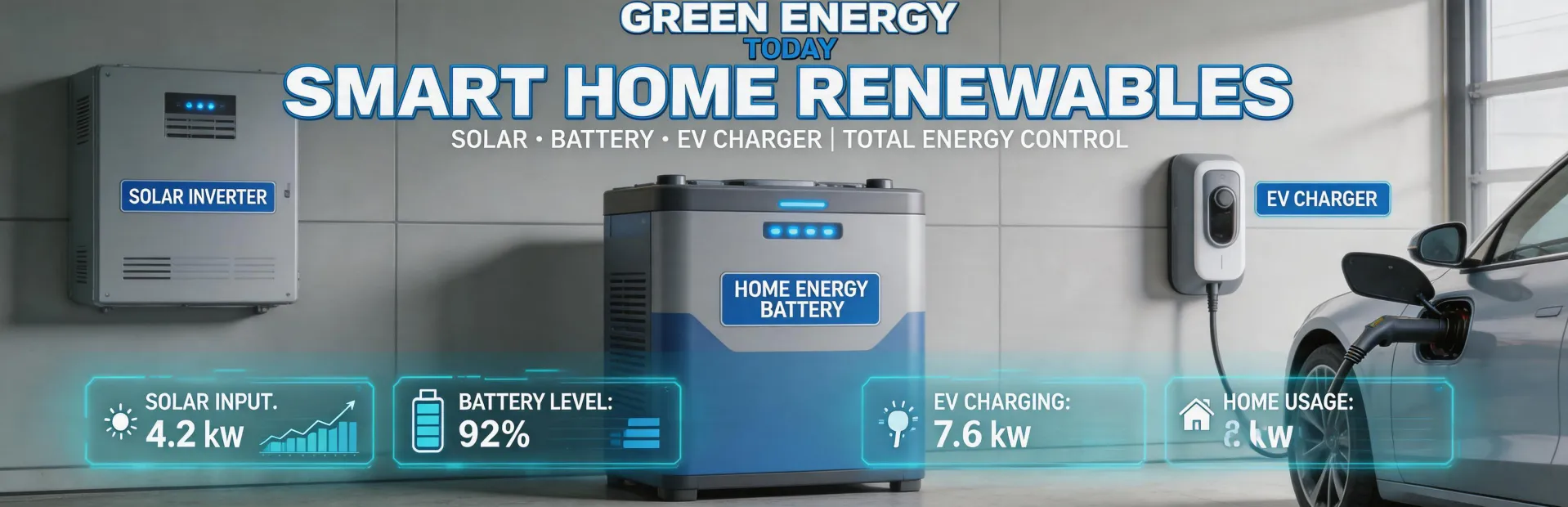
I review quality and compliance for a mid-sized solar installation company. In a typical year, I audit over 200 projects—commercial, residential, everything in between. And if there’s one thing I’ve become stubborn about, it’s this: the SolarEdge inverter WiFi connection isn’t a nice-to-have. It’s a gatekeeper for reliability, and skipping it is a gamble I’ve seen fail too many times.
Let me be clear—I used to think differently. In 2022, during a busy Q3 push, we approved a batch of 60 residential installs where we intentionally deferred setting up the WiFi on the SolarEdge inverters. The reasoning? “We’ll have the homeowners do it later.” It was supposed to save two hours per site. That decision cost us roughly $18,000 in service callbacks and lost customer trust over the next six months.
Here is why I now treat the setup of that SolarEdge inverter WiFi connection as a critical line item, not a casual add-on.
1. The Data Gap is a Liability, Not an Inconvenience
I want to say that most of our issues boiled down to one thing: without a stable WiFi connection to the inverter, we were flying blind. The SolarEdge monitoring platform is their main value-add—it provides component-level MPPT data, alerts for string mismatches, and historical production analysis. If the inverter isn’t online, the homeowner gets a “no data” status screen, and my service team gets a call, not an email.
In our Q1 2024 quality audit, we tracked the root cause of 34% of after-install service calls. The number one cause? “Customer claims system not working because app shows no data.” In every single case, the inverter was fine—they just needed a WiFi reconnection. But that still cost us $120 a trip in truck rolls, and a frustrated customer. If I remember correctly, the industry rule of thumb is that a single truck roll wipes out the profit margin on a small residential install. (Don’t hold me to the exact math, but it feels right.)
2. The “Set-and-Forget” is a Myth Without Proper Setup
Another misconception: “The SolarEdge app is simple enough that anyone can do it.” That’s kind of true. The actual process—downloading the mySolarEdge app, scanning the inverter QR code, connecting to its local access point, choosing the home WiFi, entering the password—is fairly straightforward.
But here’s the catch we missed: You have to accept that the homeowner will likely forget the password or fail to update their home WiFi (note to self: we need a better hand-off checklist for this). It’s the old reliability trade-off. The connection is deterministic if you set it up. If you ask the homeowner to “call us if it doesn’t work,” you’re asking for a service ticket.
Part of me wants to argue that inverters should just connect automatically via a cellular backup—but that adds $200+ to the hardware cost. That’s somewhat realistic for commercial, but not for residential. Personally, I think the current approach makes sense, but it demands execution discipline.
3. The “Rush” Temptation is Real—and Costly
I have mixed feelings about rush fees. On one hand, the extra $400 for guaranteed delivery on a critical component feels like gouging. On the other, I’ve seen the chaos that happens when something is delayed.
In March 2024, we paid $400 extra for rush delivery on a batch of SolarEdge HD-Wave inverters. The alternative was missing a $15,000 event for a commercial client with a hard deadline. It was the right call. The same principle applies to that initial WiFi setup. Skipping it to save 30 minutes at the end of a long day is almost never worth it. The $50 savings in labor time often turns into a $120 service call later. (unfortunately, this is a lesson we seem to re-learn every quarter).
4. Don’t Let the Perfect Be the Enemy of the Good
I should add that I’m not saying the SolarEdge inverter WiFi connection is flawless. We’ve had issues with signal strength in basements and garages, and the occasional firmware update that requires a power cycle. Those are real problems.
But here’s the counter-argument I hear: “Why not just use a cellular data plan?” For commercial projects over 50kW, we do. But for the majority of residential projects, expecting a homeowner to maintain a separate data plan for the inverter is not realistic. The WiFi connection, while imperfect, is the most practical, cost-effective solution available right now.
Put another way: the certainty of having that data stream flowing is worth far more than the frustration of occasionally dealing with a weak signal.
5. The Bottom Line for Quality
In 2023, after our Q4 review revealed that 28% of our new installations had a configuration error related to network setup (missing QIDs, incorrect pairing), we implemented a verification protocol. Every inverter commission log now includes a screenshot confirming the WiFi connection is active and showing data flowing in the portal before we move on. It adds a few minutes, but it’s paid off.
So glad we did that. Our post-install service call rate dropped by over 40% the following quarter.
I’m not 100% sure exactly how much money that saved us—maybe $6,000 in avoided truck rolls—but the real win is in our installers’ mental load. They stopped worrying about whether the system was really “on.”
Look, I know the temptation. You’re on site at 4 PM, two hours behind schedule, and the homeowner is asking about their largest portable power bank allowed on plane for an upcoming trip. It’s easy to rush the WiFi step. But that call you get a week later will remind you why you shouldn’t.
In my experience, if you skip the SolarEdge inverter WiFi connection setup, you aren’t saving time. You’re just postponing it. And trust me, the bill comes due later.

Jane Smith
I’m Jane Smith, a senior content writer with over 15 years of experience in the packaging and printing industry. I specialize in writing about the latest trends, technologies, and best practices in packaging design, sustainability, and printing techniques. My goal is to help businesses understand complex printing processes and design solutions that enhance both product packaging and brand visibility.