Table of Contents
- Is the SolarEdge Home EV Charger Really Worth the Hype?
- Do I Need a SolarEdge Inverter to Use the EV Charger?
- How Does the SolarEdge Power Optimizer Wiring Diagram Actually Work?
- Can the Charger Work Without a Home Battery?
- What’s the Biggest Mistake Installers Make on the First Go?
- How Much Did Your Setup Cost (Ballpark)?
I've been installing residential solar and storage gear for about 4 years now. I've personally made (and documented) a handful of expensive mistakes—totaling roughly $2,800 in wasted equipment and rework. I now maintain our team's pre-install checklist. This article is essentially that checklist, but for the SolarEdge Home EV charger. It's a solid product, but there's a few gotchas that aren't obvious until you're knee-deep in conduit.
1. Is the SolarEdge Home EV Charger Really Worth the Hype?
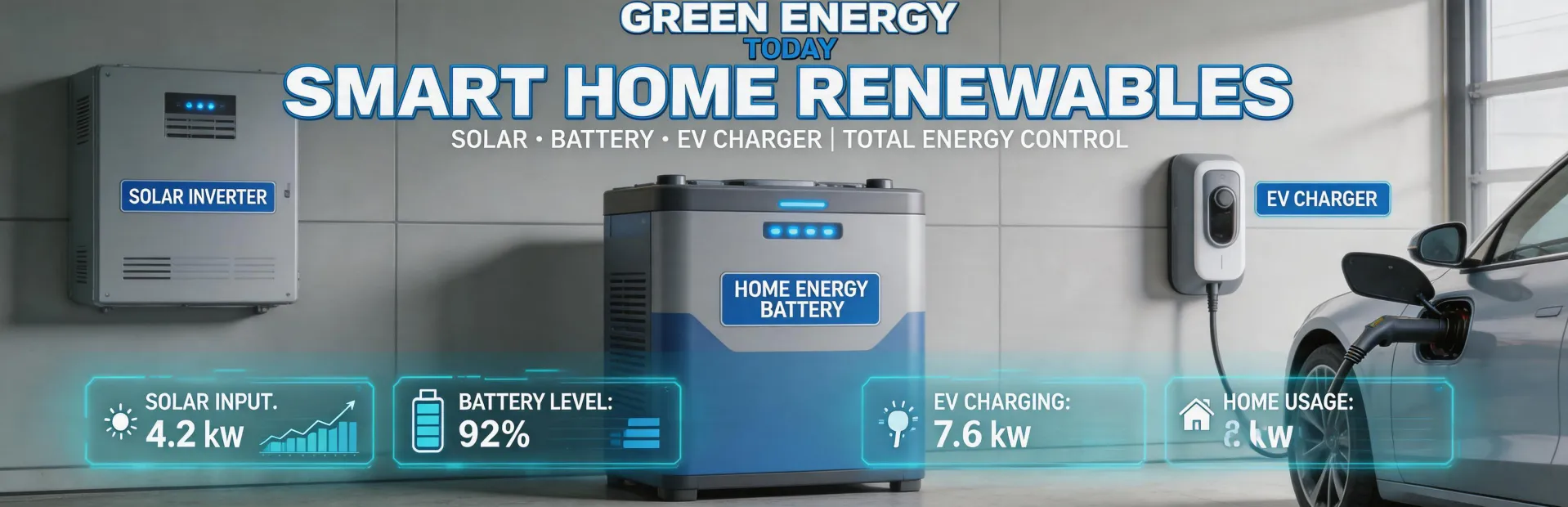
Honestly? For the right house, yes. But it's not a drop-in replacement for a basic Level 2 charger. It's part of an ecosystem. The best feature is that it communicates directly with the inverter and the home battery. If you have solar panels on the roof and a SolarEdge battery in the garage, this charger can use excess solar energy to charge your EV instead of sending it back to the grid. That's a no-brainer if you're trying to maximize self-consumption. But if you just want the cheapest wall box, this isn't it. The Wallbox Pulsar Plus is a simpler, cheaper alternative that works with any EV. The SolarEdge charger is more of a game-changer if you're already in the SolarEdge universe. (note to self: always ask the homeowner if they plan to add a battery later, because retrofitting can be a pain.)
2. Do I Need a SolarEdge Inverter to Use the EV Charger?
Yes. That's the catch. The charger uses the inverter's communication bus to manage energy flows. Without the inverter, you lose the smart charging features—like solar-only charging or time-of-use optimization. It'll still charge the car, but it becomes a dumb charger. Basically, the inverter is the brain, the charger is the arm. So if the customer has a different brand of inverter (like Enphase or Fronius), this charger is not only overpriced, it's incompatible. It'll sit on the wall looking pretty but doing nothing useful. I made this mistake on a job in early 2024: we quoted the SolarEdge charger for a customer who had a string inverter. We had to swap it out for a generic unit. Cost us $150 in return shipping and a half-day of labor. Ugh.
3. How Does the SolarEdge Power Optimizer Wiring Diagram Actually Work?
This is where people get tripped up. The Power Optimizer wiring diagram isn't for the charger—it's for the solar panels themselves. The optimizers live on the roof, one per panel. They communicate with the inverter over the DC powerline. The EV charger taps into that same communication from the inverter's side, not from the optimizers. So when you see a wiring diagram for 'Power Optimizer + EV Charger' on SolarEdge's site, you're looking at the DC side of the PV system, not the charger's AC wiring. The charger connects to AC power (from the main panel) and to the inverter's RS485 or Ethernet communication port. I wasted an hour on my first install trying to find a junction box on the roof where the charger should connect. It doesn't work that way. The optimizers are on the roof; the charger is in the garage. They only talk through the inverter downstairs. So basically: don't overthink it. The wiring is simple AC + comms. The complexity is only in the software setup.
4. Can the Charger Work Without a Home Battery?
Yes, absolutely. The charger will use whatever solar power is available to charge the car. If there's no battery, the inverter just sends the extra solar energy to the charger directly. The car's charging speed will fluctuate based on the sun. If the house needs power and the sun goes behind a cloud, the car charging rate drops. That's the whole 'solar-only' mode. It's fine, but it's not as smooth as when you have a battery. With a battery (like the SolarEdge Home Battery), the system can store excess solar during a sunny day and then use that stored energy to charge the car in the evening. That's the real value. If you just have panels and no battery, the charger is still useful—you're just limited to real-time solar. But honestly? Most homeowners I've worked with eventually want a battery. So if I'm installing the charger, I always pre-run conduit from the inverter to the garage. That saves a ton of headache later. The cost today for conduit prep is maybe $100 in materials. But if you have to add it later with drywall repair? More like $600.
5. What’s the Biggest Mistake Installers Make on the First Go?
Take this with a grain of salt, but from my personal experience? The communication wiring. On my third install, I wired the RS485 to the inverter's 'B' port instead of 'A'. The system powered on, the inverter saw the charger, but the app showed the charger as 'offline.' I spent 3 hours troubleshooting, called SolarEdge support (they were helpful, actually), and realized I had crossed the positive and negative wires on the comms line. Fix took 2 minutes. The lesson? The wiring diagram from SolarEdge is correct, but it's not idiot-proof. I now take a photo of the inverter's terminal block before I leave the job, just to have a reference. (Mental note: print the comms wiring cheat sheet and laminate it for my tool bag.) This kind of basic mistake on a $3,200 order is just painful. You feel dumb, the customer loses trust, and you're out a half-day of billable time.
6. How Much Did Your Setup Cost (Ballpark)?
Based on publicly listed prices from solar equipment distributors as of January 2025, here's a rough cost breakdown for a standard residential install (no battery, no main panel upgrade):
- SolarEdge Home EV Charger (unit): $650–$800
- Inverter (if new): $1,200–$1,800 (you already have this if upgrading)
- Comms cable (RS485 or Ethernet): $25–$75
- Conduit and breakers: $100–$200
- Labor (typical 4-6 hours): $400–$800
That's a ballpark total of $1,200–$2,900 if the inverter is already on-site. If you need a panel upgrade? Add $1,000–$2,500. Those prices exclude shipping and local taxes, and they'll vary by distributor. But it's a solid estimate for a mid-range install. Interestingly, the Wallbox Pulsar Plus (a popular alternative) retails for about $600–$700 as of this writing, so the SolarEdge hardware is actually comparable. The value is in the ecosystem integration, not the price.
One last thing: I'm not 100% sure, but I think the new SolarEdge 'One' ecosystem might simplify the wiring. If you're starting a project from scratch in 2025, check if the new architecture eliminates the separate RS485 cable. It might save you a trip to the hardware store.

Jane Smith
I’m Jane Smith, a senior content writer with over 15 years of experience in the packaging and printing industry. I specialize in writing about the latest trends, technologies, and best practices in packaging design, sustainability, and printing techniques. My goal is to help businesses understand complex printing processes and design solutions that enhance both product packaging and brand visibility.